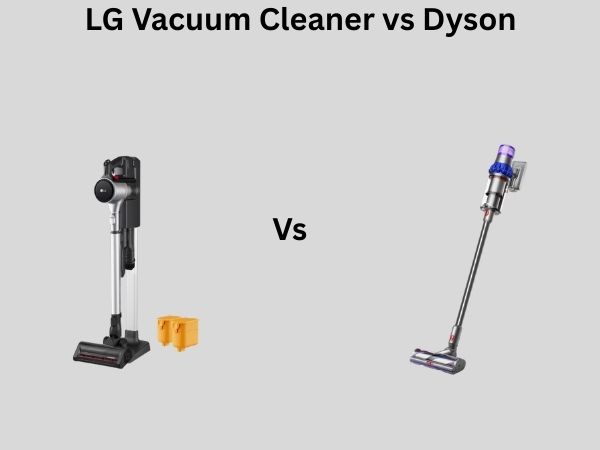
LG Vacuum Cleaner vs Dyson: Aesthetic Design vs High-Tech Suction – Which One Wins?
When you’re standing in the appliance aisle trying to decide between an LG vacuum cleaner and a Dyson, you’re essentially choosing between two different philosophies. One company prioritizes sleek, minimalist aesthetics that blend seamlessly into your home, while the other focuses on cutting-edge technology and powerful suction that gets the job done faster. But which one is actually the better choice for your household? Let me walk you through this decision together.
Understanding the Two Brands: Philosophy Meets Reality
LG is a South Korean electronics giant that’s been around for decades, known for their innovative approach to household appliances. When they ventured into the vacuum cleaner market, they brought their signature minimalist design philosophy with them. Dyson, on the other hand, is a British company founded by inventor James Dyson, who revolutionized the vacuum industry by ditching the bag and introducing cyclonic technology.
Think of it this way: LG is like a minimalist architect designing a living space, while Dyson is like an engineer focused on making the most powerful machine possible. Both have merit, but they appeal to different types of consumers.
Design and Aesthetic Appeal: Where Beauty Meets Function
LG’s Minimalist Design Philosophy
LG vacuums are absolutely gorgeous to look at. They feature clean lines, muted color palettes, and a design language that suggests simplicity and sophistication. If you’re someone who cares about how your appliances look when they’re on display, an LG vacuum won’t be an eyesore sitting in your closet or corner.
The company understands that modern homes value aesthetics just as much as functionality. Their vacuums often come in neutral colors like white, black, and gray, designed to complement contemporary interior design trends. The lightweight construction also means they won’t feel bulky or industrial in your living space.
Dyson’s Bold and Technical Appearance
Dyson vacuums, conversely, embrace their technical nature. They’re instantly recognizable with their bright colors, exposed components, and futuristic styling. When you see a Dyson vacuum, you immediately know it’s a premium product designed for performance. The design screams technology and power, which some people find appealing and others find overly aggressive.
Dyson has actually made their design a marketing tool. The visible motor, the sleek handle, and the modern color options have become status symbols in certain circles. It’s less about blending in and more about making a statement about your cleaning prowess.
Suction Power and Cleaning Performance: The Real Test
How LG Measures Up
LG vacuums deliver solid suction power, typically ranging from 150 to 200 AW (airwatts). This is more than sufficient for most household cleaning tasks, including hardwood floors, carpets, and upholstery. The suction is consistent and reliable, though not necessarily the most powerful option on the market.
What LG lacks in raw power, they often compensate for with intelligent design. Their vacuum heads are engineered to adapt to different floor types automatically, which means you don’t need overwhelming suction to achieve good results. It’s efficient rather than brute force.
Dyson’s High-Performance Engineering
Dyson vacuums are engineered for maximum suction. Their models typically feature 250+ AW of suction power, sometimes even reaching 300+ AW on their premium models. This means they can tackle pet hair, deep carpet cleaning, and stubborn debris with impressive speed.
The cyclonic technology that Dyson pioneered creates a vortex that traps dirt and dust, maintaining consistent suction throughout the cleaning session. You won’t experience the gradual drop in power that you might with some other vacuum models as the dust bin fills up.
Real-World Performance Comparison
- Pet hair removal: Dyson typically wins, though LG does adequately
- Carpet depth cleaning: Dyson excels, LG is satisfactory
- Hard floor cleaning: Both perform very similarly
- Edge and corner cleaning: Dyson’s stronger suction provides an advantage
- Overall daily use: LG’s efficiency matches Dyson’s power for average needs
Price Point and Value Proposition: What Will Your Wallet Say?
LG’s Competitive Pricing
LG vacuums generally fall into the mid-range price category, typically costing between $400 to $900 depending on the model. They offer excellent value for the money, giving you solid performance without requiring a significant investment. This makes them accessible to more households and represents a reasonable upgrade from budget brands.
Dyson’s Premium Positioning
Dyson is unabashedly premium. Their vacuums range from $600 to over $1,500 for their top-tier cordless models. You’re not just paying for suction power; you’re paying for brand prestige, advanced technology, and the latest innovations in cleaning design.
For many consumers, Dyson represents a long-term investment. If you’re willing to spend more upfront, you might get a product that lasts longer and maintains its value better resale-wise.
Cost Per Use Analysis
If you vacuum three times per week for five years, that’s roughly 780 uses. An LG vacuum at $600 comes out to about 77 cents per use, while a $1,200 Dyson works out to about $1.54 per use. The question is whether the additional performance justifies the doubled cost for your specific needs.
Durability and Build Quality: Will It Last?
LG’s Longevity Track Record
LG has a solid reputation for durable household appliances. Their vacuums are built with quality materials and typically come with 3 to 5-year warranties. Real-world user reports suggest that with proper maintenance, an LG vacuum will serve you well for 7-10 years of regular use.
Dyson’s Engineering Excellence
Dyson products are known for their exceptional build quality. The company offers comprehensive warranties, often 5 years or more, and their customer service is responsive and helpful. Many Dyson owners report their machines lasting well beyond the warranty period with minimal repairs.
The quality of components, the rigorous testing, and the commitment to durability mean that a Dyson vacuum is genuinely built to last. However, when repairs are needed, Dyson parts can be expensive compared to aftermarket alternatives.
Filtration Systems and Air Quality: Breathing Easy
LG’s Multi-Stage Filtration
LG vacuums feature advanced HEPA filtration systems that capture 99.97% of particles down to 0.3 microns. This is crucial if anyone in your household suffers from allergies or asthma. The filters are washable and reusable, which is both economical and environmentally friendly.
Dyson’s Sealed Filtration
Dyson goes several steps further with their filtration approach. Their vacuums feature fully sealed systems, meaning no unfiltered air escapes anywhere in the machine. The filters capture allergens, bacteria, and other particles, and they’re sealed in a way that prevents any leakage.
Dyson also uses washable and reusable filters in most models, and they’re engineered to maintain their effectiveness over time. For people with severe allergies or respiratory concerns, Dyson’s approach provides peace of mind.
Noise Levels and User Experience: How Loud Are We Talking?
LG’s Quieter Operation
LG vacuums typically operate at around 75-80 decibels, which is noticeably quieter than many competitors. This means you can vacuum while someone else is watching television or taking a nap without causing major disruption. The quieter operation also suggests a more pleasant user experience overall.
Dyson’s More Powerful Sound Profile
Dyson vacuums generally run louder, typically at 80-85 decibels due to their more powerful motors. That might not sound like a huge difference, but decibels are logarithmic, meaning it’s actually noticeably louder. Early morning or late-night vacuuming might disturb household members or neighbors.
That said, the noise is generally a clean, consistent sound rather than an irritating whine, so many people find it acceptable despite the higher volume.
Maintenance and Cleaning Requirements: Keep It Running Smoothly
LG’s Straightforward Maintenance
LG vacuums are designed for easy maintenance. The dust bins empty cleanly with minimal mess, and the washable filters can be rinsed under running water. Brush roller replacements are affordable and straightforward. Overall, maintaining an LG vacuum doesn’t require technical knowledge or expensive service calls.
Dyson’s More Complex Systems
Dyson vacuums, while still user-friendly, have more complex components that require attention. Emptying the dust bin involves a bit more technique to avoid dust clouds, and while the filters are washable, Dyson recommends specific cleaning procedures. Maintenance isn’t difficult, but it does require following instructions carefully.
Special Features and Technology: The Bells and Whistles
LG’s Smart Integration
As an electronics company, LG incorporates smart features into their vacuums. Some models feature smart diagnostics that can alert you to maintenance needs, and they’re integrating IoT capabilities for home automation compatibility. This is perfect if you’re building a connected smart home.
Dyson’s Advanced Engineering Features
Dyson offers features like laser detection of dust particles (in their higher-end models), cordless technology with impressive runtime, and proprietary attachments designed for specific cleaning tasks. Their digital motor is remarkably efficient, and their newest models include app-based controls and performance monitoring.
- Dyson’s laser dust detection: Shows dust clouds you can’t see
- LG’s smart home integration: Connects with your existing ecosystem
- Dyson’s cordless convenience: Untethered cleaning freedom
- LG’s automatic floor detection: Optimizes settings for different surfaces
Customer Satisfaction and Real-World Reviews: What Do Users Say?
LG User Feedback
Users generally praise LG vacuums for their quiet operation, attractive design, and reliable performance. Common positive feedback includes ease of use, good suction for everyday cleaning, and minimal maintenance requirements. Complaints are relatively rare, though some users wish for more powerful suction for deep carpet cleaning.
Dyson User Feedback
Dyson owners tend to be enthusiastic about their purchases. They love the powerful suction, the premium feel, and the visible dust particles captured in the clear bins. Some users mention that the noise level is slightly higher than expected, and a few note that replacement parts are expensive. However, overall satisfaction ratings are extremely high.
Environmental Impact and Sustainability: Thinking Green
LG’s Eco-Conscious Approach
LG has made commitments to sustainability, and this extends to their vacuum cleaners. Both the LG and Dyson washable filters reduce the need for constant replacements, which means less waste. LG’s energy-efficient motors also consume less electricity than some competing models, reducing your household’s carbon footprint.
Dyson’s Responsibility Initiatives
Dyson also emphasizes the durability and longevity of their products as an environmental benefit. A vacuum that lasts longer means fewer replacements and less waste going to landfills. Their washable filters also reduce consumable waste, though replacement parts can be pricey when they eventually need replacement.
Which One Should You Choose? A Decision Framework
Choose LG if You Value:
- Minimalist, attractive design that complements modern homes
- Quieter operation for noise-sensitive households
- Mid-range pricing that’s easier on the budget
- Straightforward maintenance and easy repairs
- Smart home integration and IoT connectivity
- Sufficient performance for average household cleaning
Choose Dyson if You Prioritize:
- Maximum suction power for deep cleaning
- Cutting-edge technology and innovation
- Premium build quality and durability
- Dealing with significant pet hair or deep carpet cleaning
- Cordless convenience and modern features
- Brand prestige and status symbol appeal
The Lifestyle Match
Honestly, the best choice depends on your lifestyle and priorities. If you live in a contemporary apartment with hardwood floors and minimal carpeting, an LG vacuum is probably the smarter choice. You’ll get great performance at a reasonable price while enjoying the elegant design. But if you have a large house with multiple carpeted rooms, pets that shed constantly, or you simply want the absolute best cleaning performance money can buy, the extra investment in a Dyson makes sense.
Specific Model Comparisons Worth Considering
LG CordZero vs Dyson V15
The LG CordZero and Dyson V15 represent the flagship cordless offerings from each brand. The CordZero offers around 200 AW of suction with a sleek design and approximately 60 minutes of runtime. The V15 pushes 300+ AW of suction with advanced laser detection and offers similar runtime. The Dyson costs significantly more, but delivers noticeably more powerful cleaning.
LG Kompressor vs Dyson V11
The LG Kompressor brings unique compression technology that reduces dust bin size while maintaining capacity. The Dyson V11 is renowned for its adaptive motor and excellent performance. Both are solid mid-range cordless options, with LG offering better value and Dyson offering more power.
Conclusion
The LG vacuum cleaner versus Dyson debate doesn’t have a universal winner because both companies excel in different areas. LG brings minimalist design, reasonable pricing, and quiet operation to the table, making them perfect for consumers who want a solid, reliable vacuum that doesn’t dominate their living space aesthetically or budgetarily. They’re practical, efficient, and thoughtfully engineered for everyday use.
Dyson, meanwhile, represents the cutting edge of vacuum technology