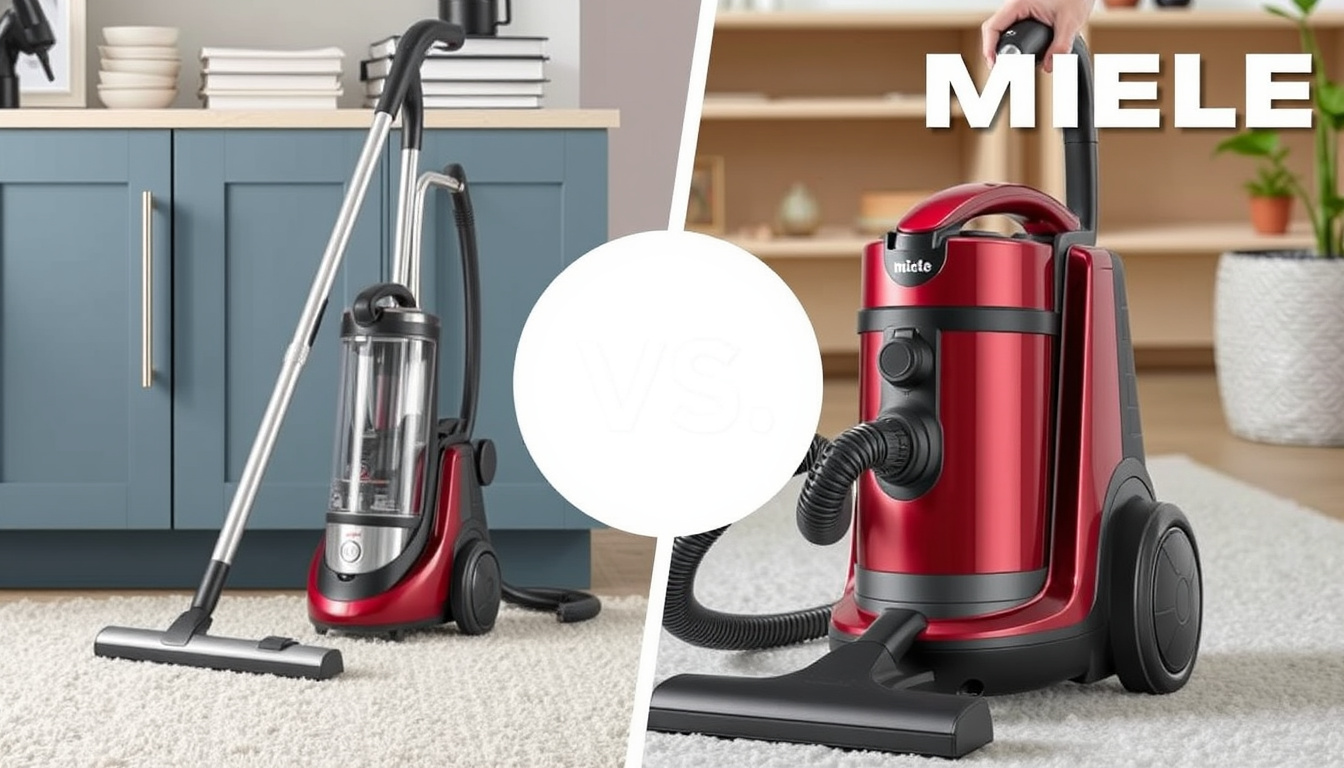
kenmore vs miele canister vacuum
Kenmore vs Miele Canister Vacuum: The Ultimate Battle for Best Suction Power and Performance
When you’re standing in the vacuum aisle, staring at two completely different machines, it’s like choosing between two completely different philosophies of cleaning. One side of the ring has Kenmore, a name that’s been around American households for decades, promising reliability and value. On the other side stands Miele, a German engineering powerhouse with a reputation for longevity and premium performance. So which one actually deserves a spot in your home? Let me walk you through this decision together.
Before we dive into the specifics of these two brands, let’s talk about why canister vacuums are worth your consideration in the first place. A canister vacuum is fundamentally different from the upright models you might be used to. Instead of the motor and dust collection sitting directly above the carpet, the main unit sits separately on the floor or in your closet, connected by a hose. This design gives you incredible flexibility and maneuverability. Think of it like the difference between a smartphone and a tablet—one is incredibly portable, the other gives you more control and a broader view.
Canister vacuums excel at cleaning multiple surfaces. You’ve got hardwood floors, area rugs, stairs, upholstery, and those awkward corners that regular vacuums can’t reach. The hose and wand configuration lets you approach every cleaning challenge from any angle you want. It’s this versatility that makes canister vacuums the preferred choice for many households, and it’s exactly where Kenmore and Miele both make their strongest cases.
Kenmore Canister Vacuums: The American Favorite
The Heritage and Reputation of Kenmore
Kenmore has been part of the American fabric since the early 1900s. The brand carries a certain nostalgia, a feeling that these machines have proven themselves in millions of homes across generations. If you grew up seeing a Kenmore vacuum in your grandmother’s closet, you’re not alone. This brand has built its reputation on being accessible, reliable, and surprisingly powerful for the price point.
What makes Kenmore interesting is that it’s a Sears brand, which means it benefits from decades of feedback from everyday customers. These aren’t machines designed by engineers working in isolation—they’re refined through the actual experiences of real people tackling real dirt and dust in their homes every single day.
Kenmore Performance and Suction Power
Let’s be honest: when you’re choosing a vacuum, suction power matters. Kenmore canister models typically offer strong suction that handles pet hair, dirt, and debris effectively across most household situations. Their mid-range models usually deliver around 12 to 13 amps of power, which translates to impressive real-world performance on carpets and hard floors alike.
The filtration systems in modern Kenmore models have improved significantly. Many now include HEPA filters that trap allergens, making them suitable for people with sensitivities. The motors are generally quieter than you might expect, operating at noise levels that won’t have your family members fleeing the house while you clean.
Price Point and Value Proposition
Here’s where Kenmore really shines: value for money. You’re looking at canister vacuum models that range from around $300 to $600 for quality machines. This is significantly less than what you’ll spend on a comparable Miele model. For families on a budget who want something dependable without paying premium prices, Kenmore delivers.
This affordability means you’re not taking a massive risk if something goes wrong. Sure, you want your vacuum to last, but with Kenmore, you’re getting solid performance without the financial burden of a $1,500 machine sitting in your closet.
Durability and Longevity Considerations
Kenmore vacuums are built to last, though perhaps not quite with the legendary durability of some European brands. Most quality Kenmore models will serve you well for 8 to 10 years with proper maintenance. Parts are readily available through Sears and online retailers, and repairs are usually straightforward and affordable. This accessibility is genuinely important when you need something fixed quickly.
Miele Canister Vacuums: German Engineering Excellence
The Miele Philosophy and Brand Identity
Miele is a completely different beast. This is a German company that’s been around since 1899, and they approach vacuum manufacturing with the kind of precision and attention to detail that Germans are famous for. The Miele philosophy isn’t about cutting corners—it’s about building machines that are engineered to perform flawlessly for decades.
When you buy a Miele, you’re not just buying a vacuum. You’re buying into a system, a commitment to quality that permeates every component. It’s the difference between a car that gets you from point A to point B and a car engineered to be a joy to drive for the next twenty years.
Superior Engineering and Component Quality
The engineering inside a Miele canister is noticeably different from most other machines. The motors are over-engineered in the best possible way. They’re designed to run cooler, quieter, and longer than motors in competing brands. We’re talking about machines that often operate at noise levels below 70 decibels—quieter than a normal conversation in many cases.
The suction power in Miele models is exceptional and consistent. These machines maintain their power even as the dust bag fills up, thanks to superior filtration systems that don’t clog easily. Most Miele models use their proprietary S-class filtration, which catches particles as small as 0.3 microns. If you have allergies or asthma, this level of filtration is genuinely worth paying for.
Advanced Features and Innovation
Miele vacuums come with features that feel almost luxurious when you first encounter them. Automatic suction adjustment means the machine senses when you’re moving from carpet to hardwood and adjusts power accordingly. Variable suction controls let you fine-tune performance for different surfaces and cleaning tasks. The hoses and wands are engineered to be lightweight yet durable, reducing fatigue during extended cleaning sessions.
The dust containers in Miele models are designed for hygiene. You can empty them without creating a cloud of dust that makes you cough. The ergonomics are carefully thought out—handles are positioned to reduce strain, and the overall design feels premium and considerate.
Longevity That Justifies the Investment
Here’s the big differentiator: Miele machines are built to last 15 to 20 years or longer with normal use. This isn’t marketing speak—this is documented through countless customer reviews and real-world usage patterns. Parts are available for Miele machines decades after purchase. They design their machines assuming you’ll want to repair rather than replace.
The warranty on Miele products reflects this confidence. Many models come with longer warranties than competitors, and the company stands behind their machines.
The Premium Price Tag
Let’s talk about the elephant in the room: cost. A quality Miele canister vacuum typically runs between $900 and $1,500, sometimes more for their top-tier models. This is three to five times more than a comparable Kenmore machine. Before you dismiss this out of hand, though, consider the math: if a Miele lasts 20 years and a Kenmore lasts 10 years, and you need two Kenmore machines to equal the lifespan of one Miele, the cost difference isn’t quite as dramatic as it initially appears.
Direct Comparison: Key Specifications
Suction Power and Performance Metrics
When we compare these brands directly, both offer strong suction for household cleaning. Kenmore models typically offer 12 to 13 amps of power, while Miele focuses on airflow and consistent suction maintenance. In real-world terms, both will handle pet hair, debris, and dust effectively. The difference is that Miele maintains consistent performance longer, while Kenmore may experience slight power reduction as the dust bag fills.
Noise Levels and User Experience
Miele machines operate at 65 to 72 decibels, while Kenmore models typically run at 75 to 80 decibels. If you have a small house or clean during early mornings, this difference is noticeable. Over hundreds of cleaning sessions, the quieter operation of Miele machines reduces fatigue and creates a more pleasant experience.
Weight and Handling
Both brands offer relatively lightweight canister models. Kenmore machines might weigh slightly less in some models, but the difference is minimal. The real distinction is in ergonomics—how the handles feel, how smoothly the hose connects, how intuitively the controls operate. Miele edges ahead here with more refined handling characteristics.
Filtration Systems
Kenmore offers decent filtration, often including HEPA filters. Miele’s filtration is more advanced, with their S-class or H-class filters capturing more particles and maintaining better airflow over time. For allergy sufferers, this matters tremendously.
- Kenmore: Standard HEPA filtration, good for most households
- Miele: Premium S-class or H-class filtration, superior for allergies
Warranty and Support
Kenmore typically offers 1 to 2 year warranties on parts and labor. Miele often provides 3 to 7 year warranties depending on the model, reflecting their confidence in durability.
Specific Use Cases: Which Is Better For What?
For Pet Owners
Pet hair is the ultimate test of a vacuum’s capabilities. Both brands handle it well, but Miele’s consistent suction maintenance means you won’t experience the power drop that might occur with a Kenmore as pet hair accumulates in the dust bag. If you have multiple pets, Miele’s superior filtration also keeps allergens at bay more effectively.
For Allergy Sufferers
If respiratory health is a priority, Miele’s H-class filtration is genuinely worth the premium investment. The filtration is more thorough, and the dust emptying mechanism is designed to minimize particle escape. Kenmore’s HEPA filters are adequate, but Miele is specifically engineered for this concern.
For Budget-Conscious Families
Kenmore is the obvious choice here. You get a reliable machine that handles most household cleaning tasks without straining your budget. You’re not getting the premium experience, but you’re getting a competent, honest vacuum that does its job.
For Long-Term Investment Thinking
If you plan to stay in your home for a decade or more and want to buy once and forget about it, Miele makes sense. The higher initial cost is offset by longevity and minimal maintenance needs.
Maintenance and Repair: Real-World Considerations
Parts Availability and Replacement Costs
Kenmore parts are available through Sears and numerous online retailers. Costs are reasonable—a replacement hose might run $30 to $50, a dust bag $15 to $25. This accessibility makes maintenance stress-free.
Miele parts are also available, though sometimes with longer lead times. Costs tend to be higher, reflecting the premium nature of the components. A Miele hose might cost $40 to $70, but it’s also built to last longer before replacement becomes necessary.
DIY Repair Feasibility
Both brands allow for user-friendly maintenance. Filters are easy to replace, dust containers are straightforward to empty and clean, and hoses can be detached without special tools. Miele machines come with more detailed instruction manuals, which actually helps with maintenance and troubleshooting.
User Reviews and Real-World Satisfaction
Common Praise for Kenmore
Customers consistently appreciate Kenmore’s value proposition. People love that the machines work reliably without the premium price tag. Users report satisfaction with cleaning performance, especially on carpets. The availability of parts and service is frequently mentioned as a significant advantage.
Common Praise for Miele
Miele owners rave about longevity—many report machines running flawlessly after 15+ years. The quiet operation is frequently mentioned, as is the consistent suction power. Users feel they’ve made a smart investment and express pride in ownership. Miele owners tend to be passionate advocates for the brand.
Common Complaints for Each Brand
Kenmore owners sometimes report power decline in older machines and occasional issues with hose connections. The noise level bothers some users during extended cleaning sessions.
Miele’s primary complaint is the high initial cost, which creates sticker shock for budget shoppers. Some users feel the premium pricing isn’t justified if they only need a vacuum for moderate use.
Environmental Impact and Sustainability
Here’s an interesting angle: the environmental impact of these choices. A Kenmore vacuum that lasts 10 years and then gets replaced is different from a Miele lasting 20 years. Fewer machines in landfills means less environmental impact. Miele’s design philosophy inherently supports sustainability through longevity.
However, Miele’s manufacturing process and heavier shipping footprint for the premium components also carry environmental costs. Neither brand is particularly known for eco-friendly manufacturing, though Miele’s emphasis on durability aligns with sustainability principles.
The Final Verdict: Making Your Decision
Choose Kenmore If:
- Your budget is limited to $600 or less
- You want a reliable machine that handles most household cleaning
- You prefer easy access to parts and repair services
- You don’t mind replacing your vacuum every 10 years
- You’re cleaning a small to medium-sized home
Choose Miele If:
- You have allergy or asthma concerns
- You want the quietest possible operation
- You plan to use the vacuum for 15+ years
- You value premium build quality and engineering
- You have multiple pets and need consistent suction
- You’re willing to invest in quality that lasts
Conclusion
The battle between Kenmore and Miele isn’t really about which vacuum is objectively better—it’s about which vacuum is better for your specific situation, priorities, and budget. Kenmore represents smart, practical value. It’s the choice of people who want a dependable vacuum without financial strain, and there’s absolutely nothing wrong with that philosophy. These machines work, they clean effectively, and they won’t break the bank.
Miele, conversely, represents an investment in longevity and premium performance. If you’re willing to spend more upfront in exchange for years of quieter, more consistent operation and a machine you might pass down to your children, Miele delivers on that promise.
Neither choice is wrong. They’re different pathways to the same destination—a clean home. Your job is to honestly assess what matters most to you: immediate affordability or long-term value. Once you know that, the decision becomes clear. Whatever you choose, you’re getting a capable canister vacuum that will serve your household well. That’s the real victory here.
Frequently Asked Questions
How long do Kenmore canister vacuums typically last?
A well-maintained Kenmore canister vacuum typically lasts between