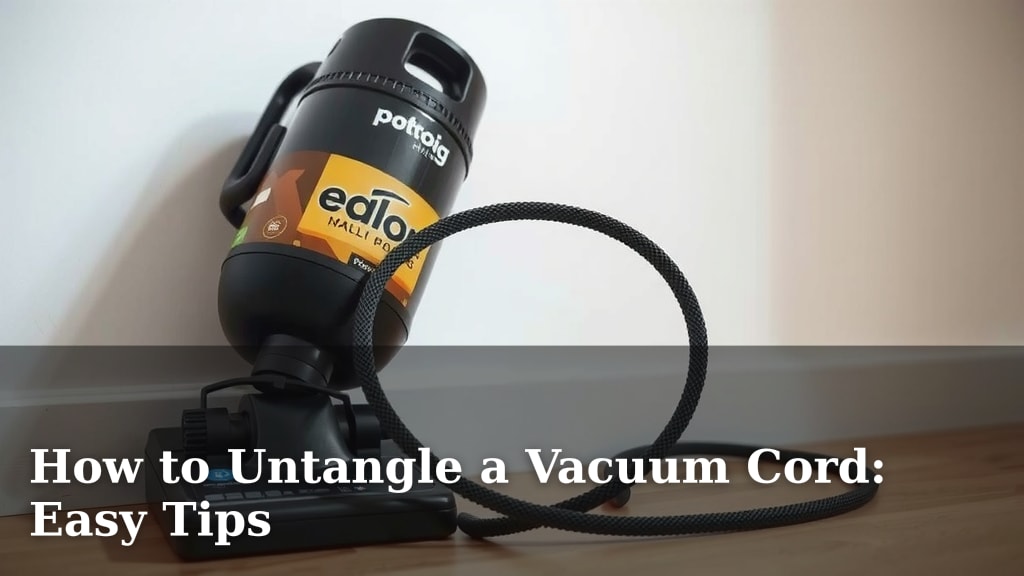
How to Untangle a Vacuum Cord: Easy Tips
Untangling a vacuum cord is usually pretty simple. You can often gently pull and separate the loops, or try winding it in the opposite direction to loosen knots. If it’s really stuck, a little patience and a careful tugging motion should do the trick. We’ve found this is the quickest way to get back to cleaning.
A knotted vacuum cord can be a real hassle. It wastes your time and can even damage the cord if you pull too hard. Learning a few simple tricks can save you a lot of frustration. These methods are designed to be quick and effective for most situations.
TL;DR:
- Gently pull loops apart.
- Try winding in the opposite direction.
- Use slow, steady tugging motions.
- Avoid yanking hard to prevent damage.
- Patience is key for stubborn knots.
Let’s walk through some easy ways to get that vacuum cord untangled without a fuss.
“`htmlTackling That Tangled Vacuum Cord: Your Go-To Guide
We’ve all been there. You’re ready to tackle those dust bunnies, and then you see it: a tangled mess of a vacuum cord. It looks like a spaghetti monster had a party with your appliance. Don’t worry, you’re not alone! Untangling a stubborn cord doesn’t have to be a wrestling match. We’ve gathered some easy-to-follow methods that will get you back to cleaning in no time.
Understanding the Mess: Why Cords Get Tangled
Before we dive into solutions, it’s helpful to understand why this happens. Vacuum cords often get tangled because of how we store them. Many of us wrap them around the vacuum itself, which can create tight bends. Over time, these bends can turn into knots. Additionally, moving the vacuum around furniture can cause the cord to loop and twist. This is especially true if the cord is left plugged in while you move the machine.
The Science of Knots (Sort Of!)
Think of it like tying your shoelaces. A simple loop can easily become a knot if you pull it the wrong way. Electrical cords, especially the flexible kind on vacuums, have a natural tendency to coil. When they coil repeatedly, especially under tension or when stored tightly, they can form complex knots. Research into polymer physics actually studies how flexible chains tangle, and our vacuum cords are no different!
Gentle Approaches for Common Tangles
Most of the time, a tangled cord isn’t a disaster. It just needs a bit of careful attention. The key is to be patient and avoid brute force. Yanking hard can damage the cord’s internal wires or the protective outer sheath. This can lead to electrical hazards and a broken vacuum. Let’s start with the simplest fixes.
The Gentle Pull-Apart Method
Look closely at the tangle. Can you see individual loops? If so, try to gently separate them with your fingers. Work from the outside of the knot inwards. Often, you can loosen a knot just by carefully easing the loops apart. This is like untangling a necklace chain. It requires a steady hand, but it’s surprisingly effective for minor tangles.
The Opposite Direction Trick
Sometimes, wrapping the cord in the opposite direction can undo the knot. If you notice a twist, try to gently unwind it. Imagine you’re loosening a screw. If the cord is wound one way, try turning it the other way. This can help loosen the tension that’s holding the knot together. Many users find this method works wonders.
The Wiggle and Glide Technique
For slightly tighter knots, try a combination of gentle pulling and wiggling. Hold the cord firmly on both sides of the knot. Then, gently pull outwards while simultaneously wiggling the cord back and forth. This can help the cord slip through the knot. Think of it like easing a bead onto a string.
When Knots Get Stubborn: Advanced Techniques
What if the gentle methods don’t quite cut it? Don’t despair! There are a few more steps you can take. These are for those moments when the cord seems determined to stay tangled. Remember, patience is your best friend here.
The “Slow and Steady” Tug
This is where a little more pressure comes in, but it’s still about control. Find a point where you can get a good grip on the cord on either side of the main knot. Now, apply a slow, steady, and *even* pull. Avoid any sudden jerks. The goal is to let the cord’s own flexibility work for you. Many household guides recommend this steady pull for stubborn tangles.
Using a Smooth Surface
Sometimes, the cord snags on itself or a rough patch. Try laying the tangled section on a smooth, flat surface, like a table or a clean floor. This reduces friction. Then, attempt the gentle pull-apart or wiggle-and-glide techniques. A smooth surface allows the cord to move more freely. We found this simple change makes a big difference.
The “Trace and Loosen” Method
Get down and really examine the knot. Trace the path of the cord through the tangle. See if you can identify which loop is causing the most restriction. Once you find it, try to carefully ease that specific loop out. This requires a bit of focus, but it’s like solving a small puzzle. You’re essentially reversing the steps that created the knot.

What NOT to Do When Untangling
It’s just as important to know what to avoid. Some actions can quickly turn a minor inconvenience into a damaged cord. Let’s ensure you’re playing it safe.
- Don’t yank hard: As mentioned, sudden, forceful tugs can damage the wires inside the cord.
- Don’t use sharp objects: Avoid using knives, scissors, or other sharp tools to cut the cord free. You could easily cut into the wires.
- Don’t force it if it feels wrong: If a cord feels like it’s about to tear or break, stop. Reassess your approach.
- Don’t leave it tangled: While you’re untangling, keep it in mind. A tangled cord is more prone to future tangles and damage.
A Quick Checklist for Untangling Success
Ready to get to work? Here’s a quick reminder of the key steps:
- Assess the knot: Look for simple loops first.
- Try gentle pulling: Ease loops apart carefully.
- Wiggle and unwind: Use opposite motions to loosen.
- Apply steady pressure: For tough knots, use slow, even tugs.
- Work on a smooth surface: Reduce friction if needed.
- Be patient: Rushing can cause damage.
Prevention: Keeping Your Cord Tangle-Free
Once your cord is untangled, how can you prevent future messes? Proper storage is key. Many vacuums have built-in cord wraps. Use them! If your vacuum doesn’t have wraps, consider investing in a cord organizer or a simple Velcro strap. Storing the cord loosely instead of wrapping it tightly can also help. Many consumer product safety guidelines recommend proper cord management to prevent trip hazards and appliance damage.
“`Conclusion
You’ve learned how to tackle that tangled vacuum cord with confidence! We’ve walked through gentle pulling, unwinding, and even steady tugging for those trickier knots. Remember, patience is your best tool to avoid damaging the cord. By applying these simple techniques, you can quickly get back to a clean home. Your next step? Practice these methods next time your cord gets knotted, and you’ll be a pro at untangling in no time!
Frequently Asked Questions
How can I quickly untangle a lightly knotted vacuum cord?
For minor tangles, start by gently pulling the loops apart with your fingers. If that doesn’t work, try winding the cord in the opposite direction of the knot. Often, a bit of wiggling while you gently pull can loosen it up.
What should I do if the cord is severely tangled and won’t budge?
When a knot is really stuck, use the “slow and steady” tug method. Grip the cord firmly on either side of the knot and apply consistent, gentle pressure. Avoid any sudden jerks, as this can cause damage to the internal wires.
Is it safe to use tools to untangle my vacuum cord?
It’s best to avoid using sharp tools like knives or scissors. These can easily cut through the protective sheath or damage the wires inside. Stick to your hands and gentle, controlled movements for safety.
What’s the best way to prevent my vacuum cord from tangling in the future?
Proper storage is key. Use the built-in cord wraps on your vacuum, or invest in a Velcro strap. When wrapping, avoid making the coils too tight, and try not to leave the cord plugged in and loosely coiled while in storage.
My vacuum cord looks frayed after untangling. Is it still safe to use?
If you notice any fraying, cuts, or damage to the cord’s outer layer, it’s best not to use it. Damaged cords can be a fire hazard. You may need to contact the manufacturer for a replacement cord or a repair.