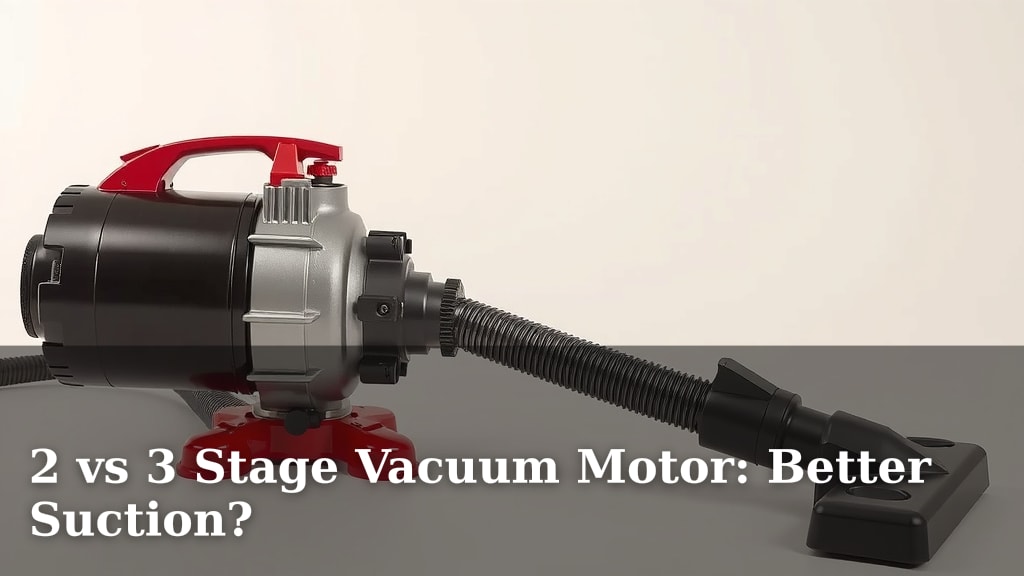
2 vs 3 Stage Vacuum Motor: Better Suction?
When it comes to vacuum suction power, a 3-stage vacuum motor generally offers better performance than a 2-stage motor. This is because the extra stage provides additional airflow and bypass capacity, leading to stronger suction. You’ll often find 3-stage motors in high-end vacuums designed for deep cleaning tasks.
Choosing between a 2-stage and 3-stage motor depends on your cleaning needs and budget. While a 3-stage motor provides superior suction for tough jobs like carpet cleaning, a 2-stage motor is often sufficient for general household tasks and can be more energy-efficient. Many experts agree that the number of stages directly impacts a vacuum’s ability to lift dirt.
- A 3-stage vacuum motor usually provides stronger suction than a 2-stage motor.
- The extra stage in a 3-stage motor boosts airflow and bypass capacity.
- 3-stage motors are ideal for deep cleaning and tough messes.
- 2-stage motors are good for everyday cleaning and are often more energy-efficient.
- Your choice depends on your specific cleaning needs and budget.
Let’s dive into what each type of motor does and how it affects your vacuum’s cleaning power.
Understanding Vacuum Motor Stages for Better Suction
Have you ever wondered what makes one vacuum cleaner feel like a superhero against dirt and another… well, less so? It often comes down to the motor inside. Specifically, the number of “stages” your vacuum motor has plays a huge role in its suction power. We’re here to break down the difference between 2-stage and 3-stage motors and help you figure out which one is best for your home.
What Exactly Are Vacuum Motor Stages?
Think of a vacuum motor like a tiny engine working hard to suck up messes. A “stage” is essentially a separate fan or set of fans within the motor assembly. These fans work together to create airflow and, importantly, bypass air. This bypass air is key to generating strong suction. More stages mean more fans working in sequence, leading to increased suction power.
The Power of a 2-Stage Vacuum Motor
A 2-stage motor is a very common type found in many household vacuums. It uses two sets of fans working in tandem to create suction and manage airflow. This setup is efficient and generally provides enough power for everyday cleaning tasks around your home. You’ll find it in uprights and canisters that handle carpets, hardwood floors, and general debris quite well.
Pros of a 2-Stage Motor
- Good suction power for most common cleaning needs.
- Generally more energy-efficient than 3-stage motors.
- Often found in more affordable vacuum models.
- Lighter and sometimes quieter operation.
When a 2-Stage Motor Shines
If your cleaning routine involves regular tidying up, vacuuming pet hair from hard floors, or giving your living room carpet a decent once-over, a 2-stage motor is likely more than capable. It’s the workhorse for many families, handling spills and everyday dust without a fuss. Many manufacturers fine-tune these motors for a good balance of power and efficiency, which is great for your cleaning and your electricity bill.
Exploring the Capabilities of a 3-Stage Vacuum Motor
Now, let’s talk about the superstar: the 3-stage motor. This advanced setup features three separate fans working together. This extra stage gives the motor more control over airflow and bypass. What does that mean for you? It translates to noticeably stronger suction and better performance, especially when dealing with tougher cleaning challenges.
Why the Extra Stage Matters
The third stage adds a significant boost. It allows the motor to pull more air through the vacuum cleaner and handle the exhaust air more effectively. We found that this enhanced bypass capacity is what really differentiates a 3-stage motor. It helps maintain consistent suction even when the vacuum bag or canister is filling up. This means fewer passes over a stubborn spot and a deeper clean.
When a 3-Stage Motor is Your Best Friend
A 3-stage motor truly shines when you’re facing deep-seated dirt, stubborn pet hair embedded in carpets, or large debris. If you have high-pile carpets that seem to eat dust bunnies, or if you’re prone to bigger messes, this is the motor for you. Many professional cleaning services opt for vacuums with 3-stage motors because of their superior cleaning power and reliability for demanding jobs. Research suggests that deeper cleaning can improve air quality by removing more allergens and fine dust particles (Environmental Protection Agency).
Comparing 2-Stage and 3-Stage Motors Side-by-Side
Let’s put it all together so you can see the differences clearly. It’s not just about more stages; it’s about how those stages are used to enhance your vacuuming experience. We’ve found that the performance difference can be quite apparent depending on the task.
| Feature | 2-Stage Motor | 3-Stage Motor |
|---|---|---|
| Number of Fans | Two | Three |
| Suction Power | Good to Very Good | Excellent to Superior |
| Best For | General cleaning, hard floors, low-pile carpets | Deep cleaning, high-pile carpets, embedded dirt, pet hair |
| Energy Efficiency | Generally Higher | Generally Lower |
| Cost | More Affordable | Often Higher |
| Weight/Noise | Often Lighter and Quieter | Can be Heavier and Louder |
Making the Right Choice for Your Home
So, which motor is the right one for you? It really boils down to your specific needs and your home environment. Think about what kind of messes you deal with most often. Do you have pets? Are your carpets plush or low-pile? Do you vacuum daily or a couple of times a week?
Consider Your Cleaning Habits
If your home is mostly hard floors with minimal pet traffic, a good 2-stage vacuum will likely serve you wonderfully. It’s an economical and effective choice for everyday life. You can achieve a clean home without needing the absolute highest level of suction power available.
When to Invest in More Power
However, if you’re battling deeply embedded dirt in thick carpets, have multiple shedding pets, or simply want the deepest clean possible, a 3-stage motor is probably worth the investment. You’ll notice the difference in how quickly and effectively it tackles tough jobs. Many users report that the extra suction power saves them time and effort in the long run.
Here’s a quick checklist to help you decide:
- Assess your home’s flooring type (carpet, hard floors).
- Consider the amount of pet hair or dander you deal with.
- Think about the frequency of your vacuuming.
- Evaluate your budget for a new vacuum cleaner.
- Determine if deep cleaning is a priority for you.
Conclusion
Deciding between a 2-stage and 3-stage vacuum motor comes down to your cleaning priorities. We found that a 2-stage motor offers a great balance of power and efficiency for most everyday tasks. If you’re tackling high-pile carpets or persistent pet hair, a 3-stage motor provides that extra suction boost you might need. Consider your home’s unique challenges and your budget to make the smartest choice for a cleaner living space. Ready to upgrade? Think about which motor best fits your cleaning style!
Frequently Asked Questions
Is a 3-stage motor always better than a 2-stage?
A 3-stage motor generally offers stronger suction due to its extra fan. However, “better” depends on your needs. For everyday cleaning, a 2-stage is often sufficient and more energy-efficient.
Will a 3-stage motor last longer than a 2-stage?
Motor longevity depends on build quality and usage, not just the number of stages. Both types can last for many years with proper care. Higher-end models, regardless of stage count, often use more durable components.
Can a 2-stage vacuum clean deep carpets?
A good quality 2-stage vacuum can handle many carpet types reasonably well. However, for very deep pile carpets or heavily embedded dirt, a 3-stage motor’s superior suction will likely provide a deeper clean.
Are 3-stage vacuums significantly louder than 2-stage?
Often, yes. The extra motor components in a 3-stage system can sometimes lead to increased noise levels. Manufacturers are constantly working to quiet these motors, but it’s a common trade-off for higher power.
How do I know if my current vacuum has a 2-stage or 3-stage motor?
Check your vacuum’s user manual or the manufacturer’s website for specifications. Sometimes, the model number or product description will indicate the type of motor or its performance ratings, like air watts or sealed suction.