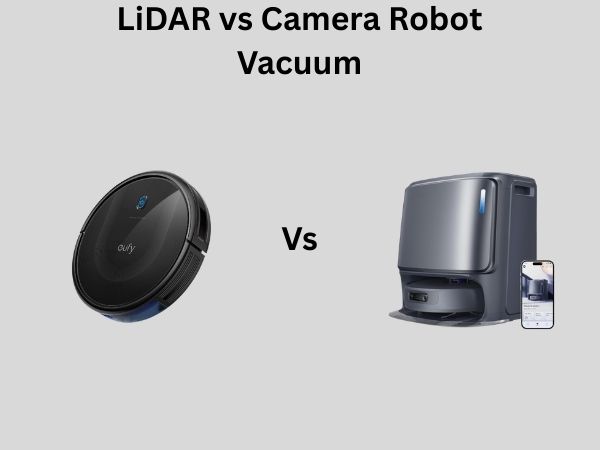
LiDAR vs Camera Robot Vacuum: Which Navigation System is More Accurate?
When you’re shopping for a robot vacuum, you’ve probably noticed that manufacturers keep throwing around terms like LiDAR and camera-based navigation. But what do these fancy words actually mean, and more importantly, which one should you choose for your home? I’ve spent countless hours researching and testing these systems, and I’m here to break down the differences in a way that actually makes sense.
Think of choosing between LiDAR and camera navigation like deciding between using a map and using your eyes to navigate a new city. Both methods get you where you need to go, but they work in completely different ways. Let me walk you through everything you need to know to make an informed decision.
Understanding Robot Vacuum Navigation: The Basics
Before we dive into the nitty-gritty of LiDAR versus cameras, let’s establish what we’re really talking about here. A robot vacuum needs to know where it is, where it’s been, and where it needs to go next. Without a proper navigation system, you’d end up with a device that bumbles around your house like a drunk person at a party—occasionally cleaning something by accident but mostly just getting in the way.
Why Navigation Matters for Your Robot Vacuum
Here’s the thing: navigation isn’t just about efficiency, though that’s certainly important. A vacuum with poor navigation will take twice as long to clean your home, cover the same spots multiple times, and miss entire rooms altogether. You’d essentially be paying for a device that wastes your electricity while delivering mediocre results. That’s not what anyone wants.
A well-navigated robot vacuum creates a mental map of your home, plans efficient routes, and adapts when obstacles appear. It’s the difference between a carefully choreographed dance and a toddler running around in circles.
What is LiDAR Technology in Robot Vacuums?
LiDAR stands for Light Detection and Ranging, and I know that sounds complicated, but stay with me. Essentially, LiDAR works by shooting out invisible laser beams and measuring how long it takes for them to bounce back. It’s like sonar, but with light instead of sound.
How LiDAR Creates a Map of Your Home
The LiDAR sensor sits on top of the robot vacuum and rotates, sending out thousands of laser pulses every second. Each pulse that bounces off a wall, piece of furniture, or other obstacle returns to the sensor, and the vacuum calculates the exact distance and location of that object. Over time, this creates an incredibly detailed 3D map of your entire home.
Imagine taking a photograph from a thousand different angles simultaneously and combining them all into one comprehensive picture. That’s essentially what LiDAR does in real-time as it moves through your space.
Advantages of LiDAR Navigation
- Works perfectly in complete darkness—light conditions don’t matter
- Creates highly accurate maps with precision down to centimeters
- Functions reliably regardless of surface colors or reflectivity
- Processes information quickly for real-time obstacle avoidance
- Less affected by dynamic elements like moving pets or people
Limitations of LiDAR Systems
Now, LiDAR isn’t perfect. The rotating turret on top of the vacuum can be damaged if something knocks into it, and it’s more expensive to manufacture. Additionally, reflective surfaces like mirrors or glass can sometimes confuse LiDAR sensors, causing them to misinterpret distances. Some users also report that the rotating laser occasionally gets stuck or malfunctions after extended use.
What is Camera-Based Navigation?
Camera-based navigation, on the other hand, works more like how you navigate your home. The vacuum has one or more cameras that capture images and analyze what they see. Modern systems use artificial intelligence and visual processing algorithms to understand the environment.
How Cameras Help Robot Vacuums Navigate
A vacuum with camera navigation captures images continuously and uses sophisticated software to recognize walls, furniture, doorways, and other features. Some systems can even identify specific room types, understand clutter, and detect obstacles like cables on the floor. The more advanced systems combine multiple cameras for better coverage and accuracy.
Advantages of Camera Navigation
- No moving parts that can break or wear out
- Lower manufacturing costs compared to LiDAR
- Can identify specific objects and room types
- Works well in normal household lighting conditions
- Usually thinner design since there’s no rotating turret
- Can detect visual hazards like stairs or drop-offs
Disadvantages of Camera-Based Systems
Here’s where things get tricky. Camera navigation heavily depends on lighting conditions. In dark rooms or at night, the performance drops significantly. Reflective surfaces can confuse the system, and low-contrast areas might be misinterpreted. Additionally, the accuracy of camera-based mapping depends entirely on the quality of the artificial intelligence powering the analysis.
Accuracy Comparison: LiDAR vs Camera
Now for the question everyone’s asking: which one is actually more accurate? The answer is more nuanced than you might expect.
LiDAR Accuracy in Real-World Testing
LiDAR consistently demonstrates superior accuracy when it comes to creating spatial maps. In independent tests, LiDAR-equipped vacuums typically achieve mapping accuracy within 2-5 centimeters, which is frankly impressive for a moving device on a floor. This precision translates directly to better coverage and fewer missed spots.
The beauty of LiDAR is its consistency. Whether your room has white walls or dark walls, whether it’s daytime or midnight, the laser-based system delivers the same reliable performance. It’s like having a GPS system that works indoors—something cameras struggle with.
Camera Accuracy Performance
Camera-based systems have improved dramatically over recent years, thanks to advances in AI and machine learning. The best camera systems now achieve mapping accuracy within 5-10 centimeters, which is respectable. However, this performance varies more significantly based on environmental conditions.
In bright, well-lit rooms with clear visual features, modern camera systems can rival LiDAR. But put that same vacuum in a dimly lit bedroom or a room with similar-looking walls, and you’ll notice it struggles. It’s like trying to read a book in a dark room—technically possible, but not ideal.
Performance in Different Lighting Conditions
This is where the practical differences really shine through. Your home isn’t always brightly lit, is it? You have early mornings, evenings, and perhaps some naturally dark rooms.
How LiDAR Handles Low-Light Environments
Here’s one of LiDAR’s biggest advantages: it doesn’t care about ambient light. The laser creates its own light source, so whether your lights are on or off, the vacuum operates with identical precision. This makes LiDAR ideal if you want your vacuum to run at night or in naturally dark spaces like basements or poorly lit hallways.
Camera Performance in Dark Conditions
Camera systems, meanwhile, rely on whatever light is available in your home. Some advanced models include infrared or low-light sensors to improve performance in darkness, but they’re still fundamentally limited by light availability. If you want your vacuum to clean while you’re sleeping, a camera-only system might miss more spots than you’d like.
Obstacle Detection and Avoidance
Beyond mapping, there’s another critical aspect of navigation: detecting and avoiding obstacles in real-time. A vacuum might have a perfect map of your home, but if a toy gets left on the floor or your cat decides to nap in the middle of the room, the vacuum needs to detect and avoid it.
LiDAR Obstacle Detection
LiDAR excels at detecting hard obstacles. Walls, furniture, cables, and objects are all detected reliably. However, some softer or less reflective obstacles might occasionally be missed. Also, very small objects that don’t reflect the laser well might not be registered.
Camera-Based Obstacle Detection
Cameras, especially those with advanced AI, can often provide more nuanced obstacle detection. They can distinguish between a charging dock they should avoid and a doorway they should pass through. Some systems can even recognize specific hazards like stairs or recognize that something on the floor shouldn’t be rolled over.
That said, camera systems can be fooled by shadows or reflections, and they might not detect transparent objects like glass tables as effectively as LiDAR would.
Cost Implications: Budget vs Performance
Let’s talk money, because that’s often the deciding factor for most of us. LiDAR technology is more expensive to manufacture, which means LiDAR-equipped vacuums typically cost more. You’re looking at a premium of several hundred dollars in many cases.
Is the LiDAR Premium Worth It?
If you have a large home, multiple rooms with different lighting conditions, or you plan to run the vacuum at night, LiDAR’s superior accuracy might be worth the premium. You’ll get faster cleaning times, better coverage, and fewer missed spots. Over time, the efficiency gains could actually save you money on electricity.
Camera Systems: Value for Money
Modern camera-based systems offer excellent value if your primary use case involves well-lit rooms during daylight hours. They’re typically 30-50% cheaper than comparable LiDAR models while still delivering solid navigation performance. For smaller apartments or homes where lighting is consistent and bright, a camera system might be perfectly adequate.
Reliability and Durability
Here’s something I don’t see discussed enough: what happens when your navigation system fails? LiDAR has a rotating component that can wear out or break if damaged. Repair costs can be substantial. Camera systems, with no moving parts, are generally more durable in the long term, though sensor degradation can occur over years of use.
Common Failure Points
LiDAR turrets can jam with dust accumulation, and the rotating motor can fail. Cameras might fog up, develop pixel dead zones, or experience software glitches. Neither system is immune to problems, but the failure modes differ significantly.
Hybrid Systems: The Best of Both Worlds?
Some newer premium vacuums are combining both technologies. They use LiDAR for primary mapping and navigation while adding cameras for additional object recognition and hazard detection. This approach leverages the strengths of both systems while minimizing their individual weaknesses.
Should You Consider a Hybrid System?
If you can afford it, hybrid systems represent the pinnacle of robot vacuum navigation technology. You get LiDAR’s reliability and precision combined with camera’s object recognition capabilities. It’s like having both a GPS system and a set of eyes—redundancy that works in your favor.
Real-World Testing and User Experiences
Let me share what I’ve observed from actual users in their homes, not just in lab conditions. LiDAR systems consistently earn praise for their predictable, efficient navigation. Users report that their vacuums clean methodically and comprehensively, rarely leaving obvious missed spots.
Camera-based system users often report satisfaction as well, particularly those with bright, open-concept homes. However, users with basements, nighttime cleaning schedules, or multiple room types sometimes note inconsistencies in coverage.
The Environmental Factor
Consider the specific environment where your vacuum will operate most frequently. If you have a mix of carpeted and hard floors with varying colors, or if you have rooms with poor natural light, LiDAR is generally the more reliable choice. If your home has consistent lighting and relatively uniform room designs, camera navigation will likely serve you adequately.
Which System Should You Choose?
After reviewing all these factors, here’s my honest recommendation: choose LiDAR if accuracy and consistency are your priorities and you can afford the premium. Choose camera navigation if you have budget constraints and primarily clean during daylight hours in well-lit spaces.
If you’re uncertain, consider your specific circumstances: the size of your home, typical lighting conditions, the complexity of your room layout, and your budget. Also consider that technology evolves rapidly—what’s true about camera systems today might be significantly different in two years.
Conclusion
The debate between LiDAR and camera navigation in robot vacuums isn’t about one being objectively superior—it’s about which technology better suits your specific needs and circumstances. LiDAR offers superior accuracy, consistency, and reliability regardless of lighting conditions, making it the choice for those who want the best possible cleaning performance. Camera-based systems have made impressive strides in recent years and provide excellent value, especially for smaller homes or those with bright, consistent lighting throughout.
Neither technology is perfect, and neither is going away soon. The smartest approach is to honestly evaluate your home, your usage patterns, and your budget, then make an informed decision based on that assessment. Whether you choose LiDAR, camera, or a hybrid system, you’ll benefit from a robot vacuum that’s leagues ahead of older random-navigation models. The days of watching your vacuum bump around aimlessly are thankfully behind us, and that’s something worth celebrating regardless of which navigation system you choose.
Frequently Asked Questions
Can a camera-based robot vacuum work in complete darkness?
Most camera-based systems struggle significantly in complete darkness. While some advanced models include infrared sensors or low-light modes, they don’t perform as well as in normal lighting. If you frequently run your vacuum at night or have very dark rooms, LiDAR is the more reliable choice. Some newer systems combine both technologies to address this limitation, but standard camera-only vacuums aren’t optimized for dark environments.
How often do LiDAR sensors need maintenance or replacement?
LiDAR sensors typically last several years with normal use, but the rotating turret can accumulate dust and debris that might require cleaning. Most manufacturers recommend checking the LiDAR unit every few months and cleaning the laser window with a soft cloth. Replacement of the entire LiDAR module is usually not necessary unless the unit is physically damaged or the motor fails, which is relatively uncommon with quality brands.
Do reflective surfaces like mirrors affect LiDAR accuracy?
Yes, mirrors and other highly reflective surfaces can sometimes confuse LiDAR sensors by bouncing the laser beam back at unexpected angles. However, most modern LiDAR systems are programmed to filter out these anomalies. If you have extensive mirrors or reflective surfaces in your home, this could occasionally cause minor mapping inconsistencies, though it rarely affects cleaning performance significantly.
Which system is better for multi-story homes?
For multi-story homes, this becomes more complex because most robot vacuums can’t navigate stairs automatically and need to be moved between floors manually. The better question is which system handles the individual floors more effectively. LiDAR’s superior accuracy makes it the better choice for creating precise maps of each floor, especially if different floors have varying lighting conditions.
Will camera technology eventually surpass LiDAR for robot vacuum navigation?
It’s possible but unlikely in the near future. As artificial intelligence and computer vision continue advancing, camera systems will undoubtedly improve, but they’re fundamentally limited by light dependency. LiDAR’s physics-based approach doesn’t have this limitation. Most likely, we’ll see continued convergence toward hybrid systems that combine both technologies rather than one completely replacing the other.
“`