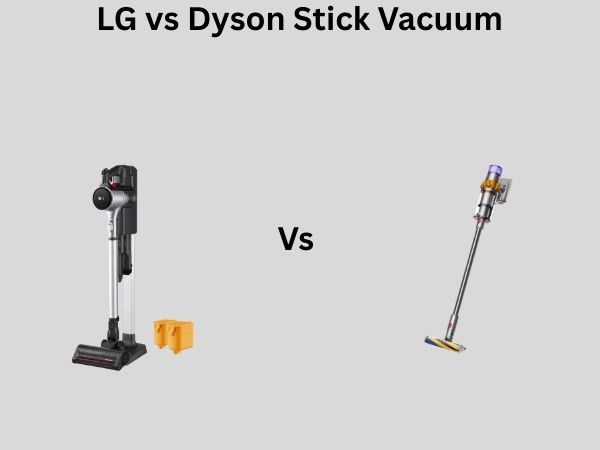
LG vs Dyson Stick Vacuum: Which One Should You Really Buy?
When you’re standing in the appliance aisle or scrolling through online retailers, you’ve probably noticed two names constantly popping up in the stick vacuum conversation: LG and Dyson. Both brands promise powerful suction, impressive battery life, and the kind of cleaning performance that makes you wonder why you ever bothered with traditional upright vacuums. But here’s the thing—they’re not created equal, and choosing between them can feel like comparing apples and oranges if you don’t know what to look for.
In this guide, I’m going to walk you through everything you need to know about both brands. We’ll dig into the nitty-gritty details, compare their real-world performance, and help you figure out which stick vacuum actually deserves a spot in your home.
Article Outline: Your Roadmap to the Perfect Stick Vacuum
- Understanding the Basics: What Makes These Vacuums Special
- LG CordZero Technology Explained
- Dyson’s Digital Motor Innovation
- Battery Life: The Real-World Test
- Suction Power and Performance Comparison
- Design and Portability Features
- Filtration Systems: Which One Keeps Your Air Cleaner
- Noise Levels: Does Quiet Cleaning Matter
- Price Point Analysis
- Warranty and Customer Support
- Real User Experiences and Reviews
- Maintenance and Durability Concerns
- Conclusion
- Frequently Asked Questions
Understanding the Basics: What Makes These Vacuums Special
Let me start with something fundamental. Stick vacuums have revolutionized home cleaning because they’re lightweight, maneuverable, and powerful enough to handle what your heavier upright models can do. They’re like the ninjas of the vacuum world—swift, effective, and surprisingly capable.
Both LG and Dyson recognized this market opportunity and invested heavily in research and development. The result? Two completely different approaches to solving the same problem: how do we make a cordless vacuum that’s genuinely powerful and reliable?
The Cordless Revolution
Remember when cordless vacuums were weak, anemic devices that could barely pick up a pile of crumbs? Those days are long gone. The technology has advanced so much that many people now prefer stick vacuums to their traditional counterparts. It’s not just about convenience—though that’s definitely part of it. Modern stick vacuums offer genuine performance improvements that make cleaning faster and more efficient.
LG CordZero: Redefining What a Stick Vacuum Can Be
LG’s CordZero line represents the company’s ambitious entry into the premium stick vacuum market. These aren’t your budget-friendly cordless options—LG is playing in the same sandbox as Dyson, and they’re bringing some genuinely interesting innovations to the table.
What Sets LG Apart
LG’s philosophy centers on the idea of a “zero cord” experience. They’ve designed their stick vacuums to work seamlessly without any tethering to traditional power outlets. But what really caught everyone’s attention is their dual-battery system. Some LG models feature interchangeable batteries, meaning you can swap out a depleted battery for a charged one and keep cleaning without interruption. It’s like having a fresh teammate tag in when the current player gets tired.
The Dual Battery Advantage
This is where LG gets clever. While you’re using one battery, the other charges. For households that do heavy cleaning sessions, this means you’re never stuck waiting for a battery to recharge. You just swap them out and continue. It’s a practical solution to a real problem that Dyson users sometimes face.
Motor Technology and Suction Force
LG uses an advanced motor system that generates impressive suction power. The specifications often claim around 200 air watts of suction force, which puts them in direct competition with Dyson’s offerings. The motor is engineered to maintain consistent performance throughout the battery’s life, which is something budget vacuums often fail to do.
Dyson’s Digital Motor: The Technology Giant Strikes Back
Dyson has been in the stick vacuum game longer than LG, and they’ve spent decades perfecting their approach. Their digital motor technology is genuinely impressive, featuring ultrasonic sensors that optimize performance across different surface types.
Why Dyson’s Motor Technology Matters
Dyson’s digital V-series motors spin at incredibly high speeds—we’re talking over 100,000 rotations per minute. This extreme speed generates the kind of suction power that can pick up stubborn pet hair, dust, and debris from carpets and hard floors alike. It’s like the difference between a gentle stream of water and a fire hose when you really need the power.
What makes it even better is that this motor doesn’t just blast at full power constantly, draining your battery. Instead, it intelligently adjusts based on what it’s cleaning. Detecting hard floors? It might reduce power slightly. Hitting a thick carpet? It ramps up. This adaptive approach helps extend battery life while maintaining performance.
The V-Series Lineup
Dyson offers multiple tiers within their V-series, from the V8 to the newer V15. Each iteration brings incremental improvements in power, battery life, and additional features. The newer models include laser detection technology that literally illuminates dust particles you can’t see with the naked eye. Talk about overkill—but it works remarkably well.
Battery Life: The Real-World Test That Matters
Here’s where things get interesting, because battery specifications on the box don’t always match what happens in your living room.
LG CordZero Battery Performance
LG’s batteries typically provide between 60 to 120 minutes of runtime, depending on the model and power setting. When you use the standard power mode, you’re looking at the full runtime. Switch to max power, and that time cuts down significantly—sometimes to around 20 to 30 minutes. The beauty of the dual-battery system is that once one battery depletes, you simply swap in the fresh one.
In practical terms, if you have a typical three-bedroom house, you can clean the entire space on a single battery in standard mode. Most households never need to switch batteries during a normal cleaning session.
Dyson Battery Longevity
Dyson’s newer models, particularly the V15, claim up to 60 minutes of runtime on a single charge. However, like LG, this figure assumes you’re using standard power settings. Crank it to max, and you’re looking at roughly 8 to 10 minutes of high-powered cleaning.
The real advantage Dyson has is battery optimization over time. Their batteries are engineered to maintain performance for several years before degradation becomes noticeable. LG batteries, while good, show slightly more degradation over time according to long-term user reports.
Charging Speed Comparison
Dyson batteries typically charge in around 3 to 5 hours, depending on the charger you’re using. LG’s dual-battery system charges similarly, but because you have two batteries, you’re essentially doubling your available runtime without waiting.
Suction Power: Numbers Don’t Tell the Whole Story
Both companies throw around impressive specifications about suction power, but what actually matters is how that power translates to real cleaning.
LG’s Suction Performance
LG stick vacuums generate approximately 200 air watts of suction force. When tested on various surfaces—thick carpets, low-pile rugs, hardwood floors, and tile—they perform admirably. They handle pet hair exceptionally well, rarely tangling the brush roll. Dust and fine particles are captured effectively, though not quite with the same efficiency as Dyson on ultra-fine debris.
Dyson’s Suction Dominance
Dyson’s higher-end models like the V15 generate approximately 230 air watts of suction, but the real advantage is in the consistency and the way they handle different debris types. The multiple brush roll designs in newer Dyson models—some with anti-tangle technology, others with extra-soft bristles for hard floors—show that Dyson has thought carefully about comprehensive cleaning.
Where Dyson really shines is with fine dust and allergens. If you suffer from allergies, a Dyson with their HEPA filtration actually removes more of the microscopic particles from your air.
Design and Portability: Which Feels Better in Your Hand
You’ll be holding and maneuvering this thing for 30 to 120 minutes, so ergonomics matter more than most people realize.
LG CordZero Design Philosophy
LG’s stick vacuums are lightweight, typically weighing between 5 to 6 pounds. The weight distribution is balanced, which means your arm won’t fatigue as quickly. The handles are designed with padding for comfort during extended use. Some models feature cordless charging docks that look like sleek sculptures in your home—they’re genuinely attractive, which matters if your vacuum sits in visible space.
Attachment Variety
LG provides a solid array of attachments. You get crevice tools for tight spaces, brush tools for furniture, and extension wands for high ceilings. The attachments clip on securely and rarely feel cheap or flimsy.
Dyson’s Engineering Excellence
Dyson vacuums are slightly heavier than LG models, typically weighing 6 to 7 pounds, but the weight feels more balanced when you’re holding it. The grip is exceptional—the ergonomic design means you can hold it for long periods without your hand cramping. There’s something about how Dyson engineers their products that just feels premium and intentional.
Dyson’s attachment system is more intuitive, with components that snap together satisfyingly. The attachment variety is comparable to LG, but the quality and thoughtfulness in design edges ahead.
Filtration Systems: Breathing Easier While You Clean
If you or anyone in your household has allergies, respiratory issues, or just cares about air quality, the filtration system matters tremendously.
LG’s Multi-Stage Filtration
LG employs a multi-stage filtration approach that captures particles and prevents them from being released back into the air. The system includes foam and mesh filters that work together. These filters are washable, which is convenient and cost-effective long-term. You simply rinse them periodically rather than buying replacements constantly.
Dyson’s HEPA Advantage
Dyson’s higher-end models feature true HEPA filtration, which captures 99.99% of particles down to 0.1 microns. This is medical-grade filtration territory. It’s the difference between “pretty good” and “genuinely excellent” for allergy sufferers. The downside? These filters are more expensive to replace, and while they’re washable, they need careful handling to maintain their integrity.
Noise Levels: The Underrated Consideration
Clean your home at 3 PM on a Saturday, and noise is irrelevant. Try using your vacuum while someone else is on a video call, and suddenly it becomes paramount.
LG’s Quieter Operation
LG stick vacuums operate at around 75 to 80 decibels, which is quieter than many traditional upright vacuums. The noise is audible but not obnoxious. You can actually hold a conversation if you’re not too close to the person.
Dyson’s High-Speed Trade-Off
Dyson models are louder, typically ranging from 80 to 85 decibels. This is the price you pay for that extreme suction power—the motor running at 100,000+ RPM naturally generates more noise. It’s still acceptable, but it’s noticeably louder than LG. Sensitive ears might find Dyson fatiguing during extended use.
Price Point Analysis: Value for Your Money
This is the practical question that everyone wants answered. How much are you actually spending, and are you getting your money’s worth?
LG CordZero Pricing
LG stick vacuums typically range from $899 to $1,499 depending on the model and included features. The dual-battery option adds to the cost, but it genuinely provides value for heavy users. Entry-level LG models are usually around $899 to $999, while premium models with advanced features push toward the $1,400+ range.
Dyson Premium Positioning
Dyson models are generally more expensive, ranging from $749 for older V-series models to over $1,700 for the latest V15. However, Dyson frequently runs sales and promotions, particularly during holiday seasons. The brand positioning is more premium, and you’re paying for established reputation and proven reliability.
Cost of Ownership Beyond Purchase Price
Don’t forget to factor in replacement parts. Dyson filters cost $50 to $80 each. LG filters are typically cheaper at $30 to $50. Battery replacements for either brand run $200 to $400. Neither company is trying to nickel-and-dime you excessively, but it’s worth considering long-term costs.
Warranty and Customer Support: Peace of Mind Matters
What happens when something goes wrong six months into ownership?
LG’s Warranty Coverage
LG typically offers a one-year manufacturer’s warranty covering defects and malfunctions. Their customer support is responsive, and getting repairs or replacements is relatively hassle-free. Extended warranties are available if you want additional protection, though they add to the overall cost.
Dyson’s Support Excellence
Dyson also provides a two-year warranty in many regions, which is actually better than LG. Their customer service is exceptional—they’re responsive and genuinely helpful. They have physical service centers in many areas, making repairs or replacements convenient. If something fails within the warranty period, Dyson generally makes things right without excessive hassle.
Real User Experiences and Long-Term Reliability
Specifications are one thing. What real people experience over months and years is another.
LG User Feedback
Users consistently praise LG stick vacuums for their quiet operation and strong suction in standard mode. The dual-battery system is beloved by those with larger homes or frequent cleaning needs. Common minor complaints include that the attachment system feels less intuitive than Dyson’s, and some users report that battery degradation becomes noticeable after two years of heavy use. Overall satisfaction is high, with most users keeping their LG vacuums for three to five years.
Dyson User Satisfaction
Dyson users tend to be enthusiastic advocates. They love the build quality, the suction power, and the comprehensive attachment system. Some users mention that the weight becomes noticeable during extended cleaning sessions, and the noise level is a common complaint. Battery degradation over time is similar to LG’s. Most importantly, Dyson users