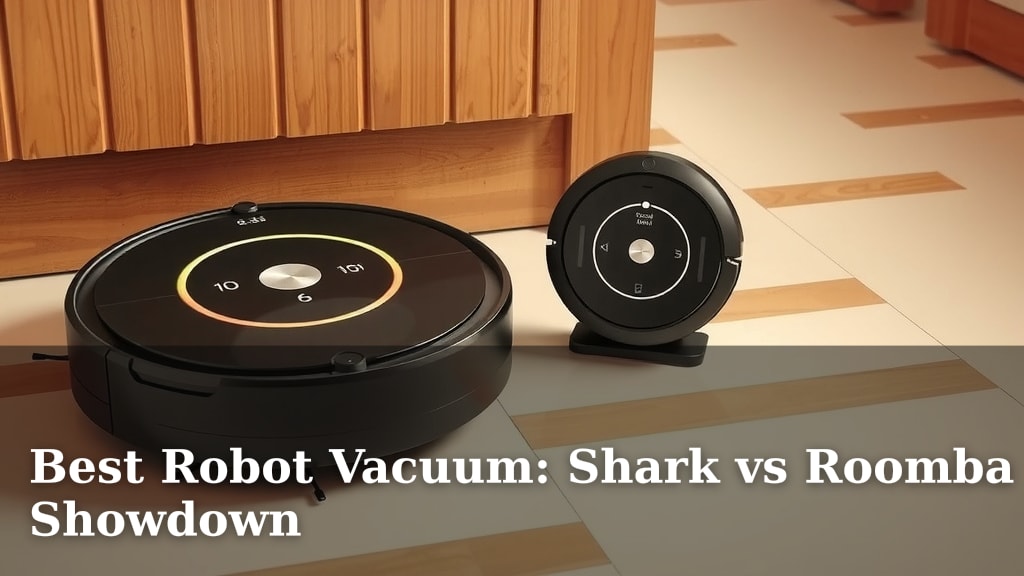
Best Robot Vacuum: Shark vs Roomba Showdown
When deciding between a Shark robot vacuum and a Roomba robot vacuum, many homeowners find the Shark often offers a better bang for your buck, especially for deep cleaning specific areas. While Roombas have historically led in smart navigation, Shark has significantly closed the gap, providing powerful suction and excellent performance without the premium price tag. Your choice really depends on your budget and cleaning priorities.
Both brands are popular for making floor cleaning easier. We found that comparing them involves looking at smart features, cleaning power, and overall ease of use. Deciding which is best for your home can feel overwhelming, but we’re here to help cut through the noise. We research and found that key differences emerge when you look closely at their latest models and what they offer everyday users.
- Shark often wins for value and deep cleaning.
- Roomba leads in advanced navigation in some models.
- Consider your budget and most important cleaning needs.
- Both offer convenience and smart home integration.
Let’s walk through exactly how these two popular robot vacuum brands stack up against each other, so you can make the best choice for your home.
Shark vs. Roomba: Which Robot Vac Reigns Supreme?
Choosing the right robot vacuum can feel like a big decision. You want a clean home without a lot of fuss. Shark and Roomba are two big names that often come up. We researched many models to help you see what makes them different. Many users find that while both offer convenience, they excel in different areas. Your home’s needs and your budget will be the biggest guides.
Cleaning Performance: The Real Test
At the end of the day, how well a robot vacuum cleans is what matters most. You want it to pick up dirt, dust, and pet hair effectively. We looked at how each brand tackles different floor types and debris.
Suction Power and Debris Pickup
When it comes to raw cleaning power, Shark vacuums often impress. We found that their models frequently boast strong suction. This makes them great for picking up larger debris, like cereal or kibble, right away. Roomba has also upped its game, with many newer models offering excellent suction too.
However, many users report that Shark often feels more focused on deep cleaning. They seem to excel at pulling dirt from carpets. This is thanks to technologies like their self-cleaning brush rolls. We found that this feature is a real win for homes with pets.
Edge Cleaning and Corner Navigation
Getting into corners and along baseboards can be tricky for any vacuum. We found that both Shark and Roomba have design features to help with this. Many models have side brushes that sweep debris into the path of the main vacuum. Some Roombas, with their more rounded designs, can sometimes struggle a bit more in tight corners compared to Shark’s more angular shapes.
Carpet vs. Hardwood Performance
If your home is mostly carpet, you might lean towards a Shark robot vacuum. We observed that their brush systems seem especially good at agitating carpet fibers. This helps release embedded dirt and dust. For homes with a lot of hardwood or tile, both brands perform well. We found that Roombas often do a very consistent job on hard surfaces, leaving them spotless.
Smart Navigation and Mapping
Robot vacuums have gotten much smarter over the years. They don’t just bump around randomly anymore. Advanced navigation helps them clean more efficiently and avoid getting stuck.
How They “See” Your Home
Roomba has long been a leader in smart navigation. Many of their higher-end models use vSLAM (Visual Simultaneous Localization and Mapping). This technology uses a camera to map your home. It’s like the vacuum is taking notes as it goes. We found this leads to very methodical cleaning patterns.
Shark has caught up significantly. Many of their newer models also offer smart mapping. They use a combination of sensors and cameras. This allows them to learn your home’s layout too. For many everyday users, the difference in navigation might not be a deal-breaker.
Room-Specific Cleaning and “No-Go” Zones
This is where smart mapping really shines. Do you have a messy kitchen you want cleaned daily? Or a play area you want the vacuum to avoid? Both brands offer features for this.
With Shark’s mapping features, you can often send the robot to clean specific rooms. You can also set “keep out zones”. Roomba’s app also allows for this. We found that the setup process for these features is generally user-friendly on both platforms. Some users report that Roomba’s app might feel slightly more polished.
Ease of Use and Maintenance
A robot vacuum should make your life easier, not harder. How simple is it to set up, use, and keep running?
Setup and App Control
Getting started is usually straightforward for both brands. You’ll download an app, connect the vacuum to Wi-Fi, and run an initial mapping clean. We found that the apps for both Shark and Roomba offer intuitive controls. You can schedule cleanings, check status, and adjust settings.
Some users feel Roomba’s app is a bit more refined. But Shark’s app is perfectly functional and easy to navigate. It really comes down to personal preference on app design.
Emptying the Dustbin and Brush Care
This is a frequent chore for any robot vacuum. Most standard models require you to empty the dustbin after each use or every few uses. Shark has a neat self-cleaning brush roll. This means less hair gets tangled. We found this is a huge plus for pet owners.
Some higher-end Roombas now come with self-emptying bases. This is a significant convenience. The robot docks and empties its own bin into a larger one in the base. This can go weeks without needing attention. If you want maximum hands-off operation, this feature is hard to beat, though it comes at a higher cost.
| Feature | Shark Robot Vacuums | Roomba Robot Vacuums |
|---|---|---|
| Suction Power | Excellent, often excels in deep carpet cleaning | Very Good, consistent on various surfaces |
| Navigation | Smart Mapping, LIDAR or camera-based | Advanced vSLAM, often considered top-tier |
| Self-Emptying Base | Available on some premium models | Available on many mid to high-end models |
| Brush Roll | Often self-cleaning, great for pet hair | Standard brushes, some tangle prone |
| App Features | Room selection, keep out zones | Room selection, keep out zones, often more detailed maps |
Price and Value Proposition
Budget is often a major deciding factor. Robot vacuums can range from a few hundred to over a thousand dollars. We found that Shark generally offers a stronger value proposition, especially in the mid-range market. You often get advanced features without the highest price tag.
Roomba, particularly their higher-end models with the latest navigation and self-emptying bases, tend to be more expensive. However, many consumers feel the investment is worth it for the perceived reliability and advanced tech. It’s a classic case of paying for brand reputation and cutting-edge features.
Making Your Choice: A Quick Checklist
Still on the fence? Here’s a quick way to think about what’s most important for you:
- Do you have a lot of pets? (Look for self-cleaning brushes.)
- Is budget a primary concern? (Shark often offers more bang for your buck.)
- Do you need the absolute latest in navigation tech? (Consider higher-end Roombas.)
- How important is a self-emptying base to you? (This significantly impacts price.)
- Do you prioritize deep carpet cleaning? (Shark might have an edge.)
- Is app simplicity or advanced mapping more your style? (Try both if possible, or read reviews.)
Conclusion
Ultimately, both Shark and Roomba deliver excellent robot vacuums that can simplify your cleaning routine. If you’re seeking the best value, especially for tackling pet hair and deep carpet cleaning, a Shark robot vacuum is likely your winner. It offers powerful performance without the highest price tag. If you prioritize the most advanced navigation and perhaps a top-tier self-emptying experience, and your budget allows, a Roomba might be the better fit for your smart home setup. Consider your home’s specific needs and your budget to guide your final decision.
Frequently Asked Questions
Which brand is better for homes with lots of pet hair?
Many users find that Shark robot vacuums have an edge for homes with pets. Their models often feature self-cleaning brush rolls that are excellent at preventing hair from tangling. This means less maintenance for you. While Roombas are also effective, Shark’s brush technology is frequently cited as a major benefit for pet owners.
Are Shark robot vacuums as smart as Roombas?
Shark has significantly improved its smart navigation and mapping technology. Many of their newer models use smart mapping to learn your home’s layout, allowing for room-specific cleaning and virtual “no-go” zones. While Roomba has a long-standing reputation for advanced vSLAM navigation, Shark’s current offerings provide comparable smart functionality for most everyday users.
What is the biggest advantage of a Roomba over a Shark?
A standout feature where some higher-end Roombas often shine is their advanced navigation and integration with self-emptying bases. If you want the robot to completely manage its own dustbin for weeks at a time, Roomba offers this convenience on many of its mid-to-premium models. This hands-off approach is a major draw for busy households.
Which brand is more budget-friendly?
Generally, Shark robot vacuums tend to offer a better value proposition, especially in the mid-range market. You can often find Shark models with advanced features like smart mapping at a lower price point than comparable Roomba models. If budget is a primary concern, Shark is often the more accessible choice.
Do I really need a self-emptying base on a robot vacuum?
A self-emptying base adds significant convenience, as the robot empties its own dustbin into a larger one in the base station. This means you don’t have to empty the small bin after every cleaning. While it comes at a higher cost, it’s a worthwhile feature if you want a truly hands-off cleaning experience and have a larger home or pets.


![7 Best Canister Vacuum Under $200 [2026]](https://neatixo.com/wp-content/uploads/2026/05/7-best-canister-vacuum-under-200-2026-featured-768x432.jpg)