Levoit Stick Vacuum vs Dyson: A Real-World Cleaning Performance Clash
When you’re standing in the vacuum aisle staring at two completely different machines—one with a sleek, minimalist design and another with that iconic bright yellow finish—it’s hard to know which one will actually transform your home. I’ve been there, and I know exactly how overwhelming it feels to choose between a Levoit stick vacuum and a Dyson. Both brands promise pristine floors, but do they deliver the same results? Let me walk you through everything you need to know to make an informed decision.
The Brand Background: Understanding Levoit and Dyson
Let me start with a bit of history. Dyson has been the household name in premium vacuums for decades. They’ve practically become synonymous with high-performance cleaning technology, and they’ve earned that reputation through consistent innovation. On the other hand, Levoit is a newer player that’s been gaining serious traction in recent years. They’ve positioned themselves as the smart alternative—delivering impressive performance without breaking the bank.
Why Dyson Built Its Empire
Dyson’s founder, James Dyson, spent years perfecting cyclonic technology and refusing to settle for mediocre performance. Their investment in research and development is legendary in the industry. They weren’t just creating vacuums; they were creating experiences. This relentless pursuit of perfection comes through in every aspect of their machines, from the moment you pick one up to the last dust particle it captures.
Levoit’s Rise in the Cleaning World
Levoit took a different approach. Instead of chasing legacy status, they focused on understanding what modern homeowners actually want. They built their reputation by listening to customer feedback and creating products that address real pain points. Their stick vacuums represent a calculated balance between functionality and affordability.
Suction Power: The Heart of Cleaning Performance
Here’s the truth—suction power matters, but it’s not the only thing that matters. Think of suction like horsepower in a car; it’s important, but you also need good handling, reliability, and fuel efficiency to have a genuinely great ride.
Dyson’s Motor Technology
Dyson’s digital motor spins up to 110,000 times per minute. That’s absolutely bonkers when you think about it. This incredible speed generates serious suction force that can pick up everything from fine dust to large debris. The consistency of this suction across the cleaning head is what really sets them apart. You’re not experiencing power fluctuations when the dust bin gets fuller—Dyson engineered their machines to maintain constant performance.
Levoit’s Suction Capabilities
Levoit stick vacuums typically offer around 20-22 kPa of suction force, which is genuinely respectable. It’s enough to handle most household cleaning tasks effectively. The difference between 22 kPa and Dyson’s higher ratings might sound small, but in practical terms, you’ll notice it when tackling stubborn pet hair or deep carpeting. Levoit’s motors are efficient and reliable, just operating in a slightly different performance bracket.
Design and Ergonomics: Comfort Meets Functionality
Using a vacuum for 20 minutes when your arms are exhausted is entirely different from using one that feels weightless. Design matters more than people realize.
The Weight Factor
Dyson stick vacuums typically weigh between 5.5 to 6.5 pounds, depending on the model. Levoit models often come in around 4.5 to 5.5 pounds. Now, a pound might not sound like much, but when you’re holding that weight above your head to clean ceiling fans or high baseboards, it absolutely makes a difference. Lighter doesn’t always mean better, though—sometimes a bit more weight means better balance and control.
Handle and Grip Design
Dyson invested heavily in ergonomic research. Their handles are positioned to reduce strain on your wrist and arm. The grip feels natural, and the machine’s balance point makes it feel almost like an extension of your arm. Levoit’s design is simpler but functional. It gets the job done without the premium feel, though some users actually prefer the straightforward design without unnecessary flourishes.
Swivel Head Technology
Both brands offer swivel heads that make turning and maneuvering easier. Dyson’s swivel is incredibly responsive and feels locked in when you need it to be stable. Levoit’s version works well too, though it feels slightly less refined in terms of build quality.
Filtration Systems: Breathing Easy While Cleaning
This is where things get interesting. A powerful vacuum that shoots allergens back into the air isn’t actually doing you any favors.
Dyson’s Filtration Approach
Dyson uses whole-machine sealed filtration. What does that mean? It means that every speck of dirt and allergen that gets sucked up stays in the machine and doesn’t escape back into your home. They’ve engineered their filters to capture particles as small as 0.3 microns. For people with allergies or asthma, this is genuinely life-changing. The filters require maintenance—you’ll be washing them regularly—but the performance justifies the effort.
Levoit’s Filtration Strategy
Levoit uses HEPA filtration systems that are genuinely effective. Their filters capture allergens and particles effectively, though not quite to the same microscopic level as Dyson. The maintenance is similarly straightforward—regular washing keeps them in top condition. If you’re looking for solid allergen protection without the premium price tag, Levoit delivers adequate performance.
Battery Life: How Long Can They Really Last?
A powerful vacuum that dies halfway through your cleaning session is worse than having no vacuum at all.
Dyson’s Battery Performance
Dyson’s latest models offer up to 60 minutes of runtime on a single charge in lower power modes. In maximum suction mode, you’re looking at around 8 to 10 minutes. Most of the runtime comes in standard mode, which is fine for everyday cleaning. The batteries charge fully in about 3.5 hours, and Dyson’s battery technology is reliable—they maintain their charge capacity for years.
Levoit’s Battery Capabilities
Levoit stick vacuums typically provide 25 to 35 minutes of runtime in standard mode, dropping to about 10 minutes on maximum power. The charging time is comparable to Dyson, around 4 to 5 hours. For a typical home, this is usually sufficient, though you might need strategic planning if you have multiple floors or extensive carpeting.
Which Battery Performance Wins?
Dyson edges out here, especially if you have a larger home. However, Levoit’s battery is adequate for most people, and the difference becomes less meaningful if you’re cleaning in lower power modes most of the time.
Cleaning Heads and Attachments: Tools for Every Job
The best vacuum in the world is only as good as its ability to tackle different surfaces and mess types.
Dyson’s Attachment Arsenal
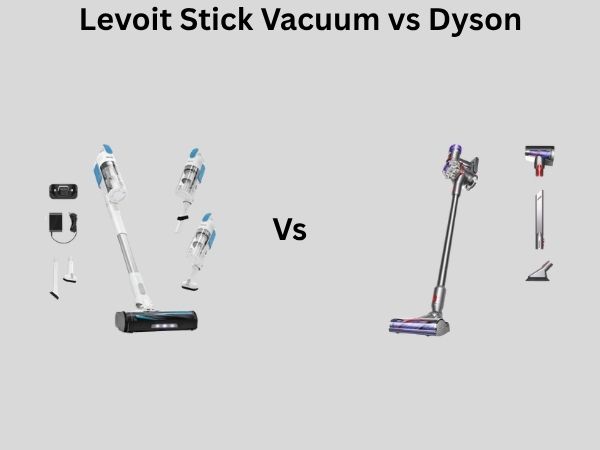
Dyson includes multiple cleaning heads depending on your model. Motorized heads for carpets, soft roller heads for hard floors, and specialized pet hair tools are standard. The attachments feel premium, connect easily, and work exactly as intended. You get combination tools, crevice tools, upholstery brushes, and extension hoses. It’s comprehensive, and each tool feels like a worthwhile addition rather than an afterthought.
Levoit’s Accessory Collection
Levoit provides solid accessories without overwhelming you with options. You typically get a basic motorized brush for carpets, a hard floor brush, and a few useful attachments for above-floor cleaning. It’s a more minimalist approach, which some people appreciate. You’re getting the essentials without paying for extras you’ll never use.
Real-World Cleaning Performance on Different Surfaces
Hardwood Floors
Both machines excel on hardwood floors when using appropriate attachments. Dyson’s soft roller head glides smoothly without causing scratches, picking up debris effectively. Levoit’s hard floor brush works competently, though it feels slightly less refined. For hardwood purists, Dyson’s design is smoother, but Levoit gets the job done.
Carpeted Areas
Here’s where Dyson’s suction power becomes more noticeable. For deep carpeting, especially with pet hair embedded, Dyson’s stronger pull really shines. You’ll feel the difference when pulling up stubborn debris. Levoit handles standard-pile carpet well, but thick, high-pile carpeting might require more passes.
Pet Hair Challenges
Pet owners, listen up. This is where Dyson’s investment in motorized heads becomes worth every penny. Their pet hair tools genuinely transform how well the vacuum performs on fur-covered furniture and floors. Levoit’s pet tools work, but they’re not quite as effective. If pets are shedding everywhere in your home, Dyson is the stronger choice.
Durability and Build Quality: What’s This Thing Made Of?
A vacuum that breaks after two years isn’t a bargain, no matter what you paid for it.
Dyson’s Build Reputation
Dyson products feel solid from the moment you handle them. The plastics are high-grade, the connections are robust, and the overall engineering speaks to a company that expects their machines to last for years. They offer a 5-year warranty on many models, which reflects their confidence in their craftsmanship. I’ve seen Dyson vacuums that are five years old functioning like new machines.
Levoit’s Construction Quality
Levoit’s stick vacuums are adequately built. They’re not fragile by any means, but the materials don’t feel quite as premium as Dyson’s. The plastic components are decent quality, and the mechanisms work smoothly. Levoit typically offers a 2-year warranty, which is reasonable but shorter than Dyson’s coverage. For careful users, they’ll last many years. For families with young children or particularly rough use, the durability difference becomes more apparent.
Pricing and Value for Money
This is perhaps the biggest differentiator between these two brands.
Dyson’s Price Tag
Dyson stick vacuums range from about $300 to $750 depending on the specific model and features. It’s a significant investment, no question about it. You’re paying for brand reputation, advanced technology, and premium materials. If budget isn’t a constraint and you want the absolute best performing machine, Dyson’s price makes sense.
Levoit’s Affordability Strategy
Levoit models typically run between $150 to $350. You’re looking at roughly half the price of comparable Dyson models. This makes Levoit incredibly attractive for budget-conscious shoppers or first-time stick vacuum buyers. You’re getting genuinely solid performance without the premium price tag.
The Real Value Question
Is Dyson worth double the price? That depends entirely on your situation. If you have multiple pets, thick carpeting, and someone with allergies in your home, Dyson’s performance advantages justify the cost. If you have a modest home with hard floors and minimal cleaning challenges, Levoit delivers excellent value and will handle your needs admirably.
Maintenance and Upkeep: The Hidden Costs
Filter Maintenance Requirements
Both machines require regular filter cleaning. You’ll want to wash filters every 2-4 weeks depending on usage. It’s a simple process with both brands—just rinse under water and let dry. However, replacement filters eventually become necessary. Dyson filters can cost $50-80, while Levoit filters typically run $30-50. Over five years, the filter replacement costs add up.
Dustbin Emptying and Cleaning
Both brands make dustbin emptying relatively easy. One-click releases and clear visibility show when you’re full. Dyson’s dustbin is slightly larger, meaning fewer emptying trips. Levoit’s is compact but gets the job done. Neither is particularly burdensome to maintain.
Customer Reviews and Real-World Satisfaction
What are actual users saying about their experiences?
Dyson User Feedback
Dyson owners consistently praise the suction power and cleaning performance. Common compliments include the lightweight feel and effective pet hair removal. The main complaint is the price—many feel it’s hard to justify the cost even as they acknowledge the quality. Battery life in maximum mode gets criticism from some users who find 8-10 minutes limiting.
Levoit User Feedback
Levoit owners frequently mention satisfaction with the value proposition. They appreciate that they got a genuinely functional vacuum without spending a fortune. Comments about quieter operation and adequate battery life for everyday use appear regularly. Fewer complaints about durability, though some users report that after 2-3 years, performance begins declining slightly.
Which Vacuum is Right for Your Situation?
Choose Dyson If:
- You have multiple pets or significant shedding issues
- You have thick, high-pile carpeting throughout your home
- Someone in your household has allergies or asthma
- You want the longest battery life and maximum suction power
- You’re willing to invest in premium performance and longevity
- You want the most comprehensive attachment and tool options
Choose Levoit If:
- You’re budget-conscious and want solid performance without premium pricing
- Your home is primarily hard floors with minimal carpeting
- You live in a smaller space that doesn’t require extended battery life
- You prefer simplicity and straightforward functionality
- You want adequate cleaning power for everyday household messes
- You’re a first-time stick vacuum buyer testing the waters
Conclusion
The comparison between Levoit stick vacuums and Dyson isn’t about determining which brand is objectively better—it’s about determining which brand better matches your specific needs and financial situation. Dyson represents the pinnacle of stick vacuum engineering. Their machines perform exceptionally, last for years, and come with the confidence of premium engineering. You’re investing in proven reliability and superior cleaning power, especially for challenging situations like pet hair and deep carpeting.
Levoit, meanwhile, offers a genuinely compelling alternative for people who want solid cleaning performance without the luxury price tag. Their machines handle everyday cleaning admirably, feel good to use, and represent excellent value for the money. They won’t match Dyson’s performance on the