Lawn Sweeper vs Leaf Vacuum: Best for Fall?
When facing a mountain of fall leaves, a lawn sweeper is generally the best option for most homeowners because it’s faster and easier for collecting large amounts of dry leaves from your lawn. While a leaf vacuum is powerful, it’s often better suited for smaller areas or tougher debris. We found that for typical yard cleanup, the sweeper wins.
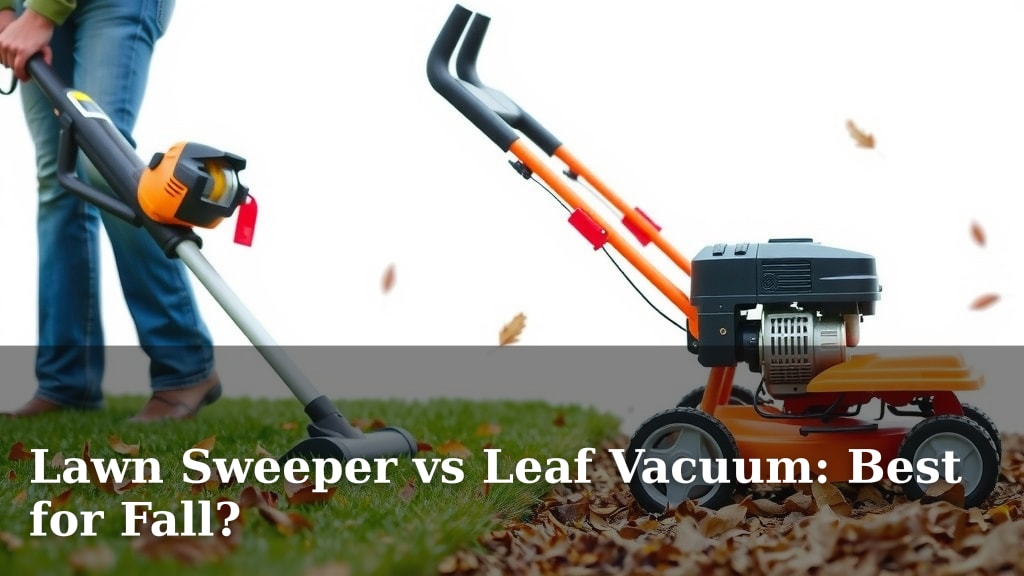
Choosing between these two can significantly change your fall cleanup experience. A lawn sweeper is like a big, efficient rake on wheels, while a leaf vacuum is more like a powerful, portable leaf-sucking machine. We’ve looked at how each performs in different scenarios to help you decide. You want a method that’s effective without being exhausting.
TL;DR:
- Lawn sweeper is better for large, dry leaf piles.
- Leaf vacuum excels in smaller spaces or wet leaves.
- Sweepers are generally faster for broad coverage.
- Vacuums offer more controlled debris collection.
- Consider your yard size and leaf type.
We’ve done the digging so you don’t have to. Let’s break down which fall cleanup tool will make your yard work a breeze this season.
“`htmlChoosing the Right Tool for Your Leaf Pile: Sweeper or Vacuum?
So, you’re staring down a yard full of autumn leaves. It’s a pretty common sight! Your biggest question is likely this: which tool makes the job easiest? We’ve found that when it comes to tackling broad expanses of dry leaves, a lawn sweeper often takes the crown. But a leaf vacuum has its own superpowers. Let’s figure out which one fits your fall cleanup routine.
How a Lawn Sweeper Works Its Magic
Imagine a giant, multi-pronged rake that scoots along behind you. That’s kind of like a lawn sweeper! It uses spinning brushes to collect leaves and deposit them into a collection bag or hopper. Think of it as a mobile leaf-gathering station. It’s designed to cover a lot of ground quickly. This makes it ideal for large, open lawns.
The Sweeper’s Strengths
One of the biggest advantages is its speed. For wide-open spaces, you can cover more area in less time. We found that dry leaves are its favorite snack. They get brushed up efficiently. Plus, many models are self-propelled or easy to push. This means less physical strain on your part. You’re not bending over constantly like with raking.
When a Sweeper Might Not Be Your Best Friend
However, sweepers have their limits. They aren’t usually the best for wet, heavy leaves. Those can clog the brushes. Also, if you have a lot of uneven terrain or tight spots with lots of landscaping, it can be tricky to maneuver. We found that they struggle with debris other than leaves, like twigs or pinecones. The brushes might not pick those up effectively.
Understanding the Power of a Leaf Vacuum
A leaf vacuum is a different beast altogether. It uses suction to pull leaves into a bag. Many are powered by gas or electricity. Some are handheld blowers that can also vacuum. Others are wheeled units that tow a large collection bag. They are designed for a more powerful, focused approach to leaf collection.
Where Leaf Vacuums Shine
Leaf vacuums excel in certain situations. If you have a lot of hard surfaces like driveways or patios, a vacuum can be very effective. It can suck up leaves from those areas quickly. We found that they are also great for dealing with wet or compacted leaves. The suction power can handle heavier debris that a sweeper might miss.
Small Spaces and Precision Cleanup
For smaller yards or areas with lots of flower beds and tight corners, a leaf vacuum can offer more control. You can direct the suction more precisely. This is handy for getting leaves out from under bushes without disturbing your plants. Many models also have a mulching feature. This reduces the volume of leaves in the bag, which is a nice bonus.
The Drawbacks of Leaf Vacuums
The main downside is often power consumption. Gas models can be noisy and require maintenance. Electric models tether you to an outlet or rely on battery life. We found that for very large, open lawns, they can be slower than sweepers. You have to keep moving the unit or the hose. Also, the weight and noise can be tiring over long periods.

Head-to-Head Comparison: Sweeper vs. Vacuum
Let’s put these two side-by-side to see how they stack up. Choosing the right one really depends on your specific needs and yard conditions. We’ve put together a quick comparison to help guide your decision.
| Feature | Lawn Sweeper | Leaf Vacuum |
|---|---|---|
| Best For | Large lawns, dry leaves | Small areas, wet leaves, hard surfaces |
| Speed | Faster for broad coverage | Slower for large areas, faster for spot cleanup |
| Ease of Use | Easy to push, less bending | Can be noisy, requires more physical effort for some models |
| Debris Type | Primarily dry leaves | Leaves, small twigs, wet debris |
| Collection Method | Brushing into hopper | Suction into bag (often with mulching) |
| Power Source | Manual or self-propelled | Electric (corded or battery) or gas |
Your Yard Size Matters Most
If you have an acre of open lawn, a sweeper is likely your best bet. It will cover that ground much faster. If your yard is less than a quarter-acre, or has lots of landscaping, a vacuum might be more practical. We found that the ability to maneuver easily is key in cluttered spaces.
Leaf Condition is Key
Are your leaves fresh and dry? A sweeper will handle those beautifully. If they’ve been sitting through rain and are a soggy mess, the suction of a vacuum will be more effective. Remember, wet leaves are heavy! They can really bog down a sweeper.
Making Your Final Decision: A Checklist
To help you make the final call, consider these points. We want you to feel confident in your choice!
- Assess your lawn size: Big or small?
- Consider leaf type: Dry and light, or wet and heavy?
- Think about terrain: Mostly flat, or lots of landscaping and inclines?
- Factor in noise tolerance: Are you okay with gas engines, or prefer quieter electric?
- Evaluate your energy level: Do you want minimal physical strain?
- Budget and storage: How much do you want to spend and where will it live?
By answering these, you’ll have a much clearer picture of which tool will make your fall leaf cleanup less of a chore and more of a breeze. Both have their merits, but one will likely be a better fit for your unique situation. We found that thinking through these details prevents buyer’s remorse.
“`Conclusion
You’ve weighed the options, and the best tool for your fall leaf cleanup is within reach. For sprawling lawns covered in dry leaves, a lawn sweeper will save you time and effort. If your yard is smaller, features more hard surfaces, or you’re battling damp, heavy leaves, a leaf vacuum offers superior suction and control. We found that matching the tool to your specific yard conditions and leaf type is the key to a frustration-free autumn cleanup. Take a moment to assess your yard’s needs, and you’ll confidently choose the right equipment to make leaf season a breeze.
Frequently Asked Questions
Which is better for mulching leaves, a sweeper or a vacuum?
Leaf vacuums are generally better for mulching. Many vacuum models come with a built-in mulching function that significantly reduces the volume of leaves. Lawn sweepers do not typically offer a mulching feature, as their primary function is collection.
Can a lawn sweeper pick up twigs and pinecones?
Lawn sweepers are primarily designed for leaves. They may pick up very small, lightweight twigs or pine needles, but they often struggle with larger or heavier debris like thicker twigs or pinecones. A leaf vacuum with strong suction might handle these better.
How much storage space do I need for a lawn sweeper versus a leaf vacuum?
Storage needs vary by model. Push lawn sweepers can often be stored upright or have folding handles to reduce their footprint. Wheeled leaf vacuums, especially gas-powered ones, can be bulky. You’ll want to measure your available storage space before purchasing.
Are lawn sweepers or leaf vacuums better for hilly yards?
For hilly yards, maneuverability is key. A lightweight push lawn sweeper might be easier to control on inclines than a heavy gas-powered leaf vacuum. However, some self-propelled sweepers can also manage hills effectively. Consider the weight and propulsion system of each tool.
How do I maintain my lawn sweeper or leaf vacuum?
Both tools require basic maintenance. For sweepers, keep the brushes clean and check for wear. For vacuums, ensure the engine (if gas) is maintained, clean the filter regularly, and check the impeller for any blockages. Always refer to your owner’s manual for specific instructions.