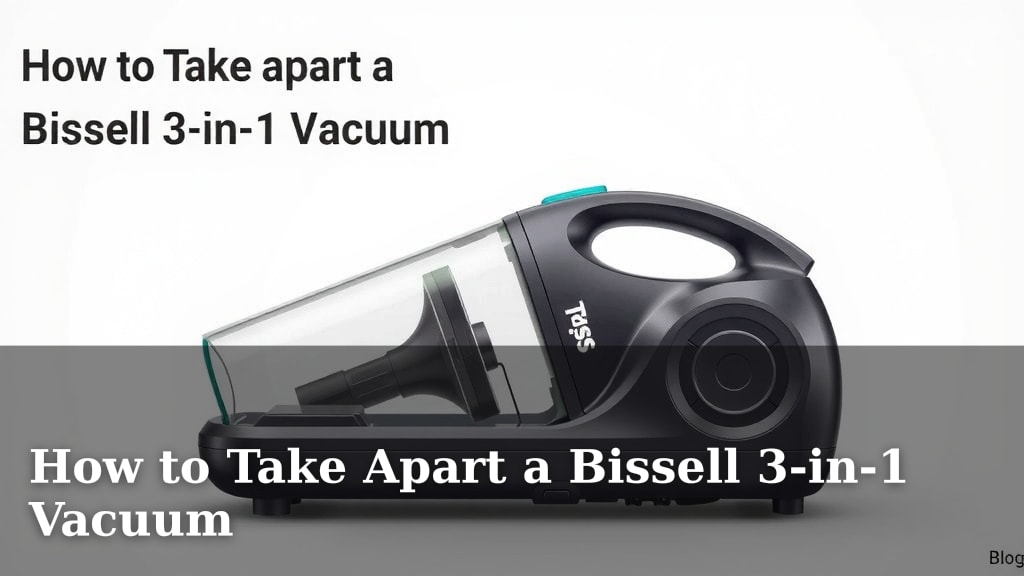
How to Take Apart a Bissell 3-in-1 Vacuum
Taking apart your Bissell 3-in-1 vacuum is quite straightforward! You’ll primarily need to remove the dust cup and then unscrew a few key components to access the motor and filter areas. This process is essential for both deep cleaning and replacing worn-out parts.
Understanding how to disassemble your vacuum helps you maintain its peak performance. Many users find that regular disassembly for cleaning can prevent clogs and extend the lifespan of the machine. It’s a simple way to keep your floors looking their best.
- Locate and remove the dust cup.
- Identify and unscrew the main body screws.
- Carefully separate the housing to access internal parts.
- Remember to unplug your vacuum before starting!
Ready to get your hands a little dusty (in the best way possible)? Let’s walk through exactly how to take apart your Bissell 3-in-1 vacuum step by step.
“`htmlGetting Inside Your Bissell 3-in-1 Vacuum
Ready to peek under the hood of your Bissell 3-in-1? We’ll guide you through taking it apart for a thorough cleaning or to check on its internal parts. It’s not as daunting as it might seem! Most of the process involves removing the dust cup and then a few screws to access the motor and filters.
Step 1: Power Down and Prepare
First things first, safety is key! Always unplug your vacuum from the power outlet before you start taking anything apart. This prevents any accidental starts, which could be quite unpleasant. Find a clean, well-lit space to work. Laying down a towel or sheet can help catch any dust or small parts you might encounter.
Step 2: Removing the Dust Cup Assembly
Your Bissell 3-in-1’s dust cup is the most frequently accessed part. You’ll likely need to remove it for regular emptying and cleaning. Look for a release button or latch near the top of the dust cup. This is usually a clearly marked lever. Simply press this button or lift the latch, and the dust cup should slide or lift away easily. Some models might have a slightly different mechanism, but the principle is the same – find the release!
Cleaning the Dust Cup
Once removed, give the dust cup a good clean. Most are washable. You can rinse it under warm water. Make sure it’s completely dry before putting it back. This prevents mold and ensures your vacuum doesn’t smell musty. Check your manual if you’re unsure about washing your specific model’s dust cup.
Step 3: Accessing the Filter Area
The filter is crucial for trapping fine dust and debris. Keeping it clean means your vacuum works better and your air stays cleaner. We found that a clogged filter is often the culprit behind reduced suction power. After removing the dust cup, you should see the filter area. It might be a cylindrical filter or a flat one.
Locating and Removing the Filter
Often, the filter is housed within the vacuum’s main body, just behind where the dust cup was. You might need to gently pull it out, or there could be a small clip or tab holding it in place. Sometimes, a screw might secure a cover over the filter. If so, you’ll need a screwdriver.
Filter Maintenance Tips
Most Bissell 3-in-1 filters are washable. Gently tap it against a trash can to remove loose debris first. Then, rinse it under cool running water. Again, allow it to air dry completely before reinserting it. Wet filters can damage the motor and lead to mold growth. Experts recommend cleaning your filter at least once a month, or more often if you vacuum frequently (Cleveland Clinic).
Step 4: Unscrewing the Main Body
If you need to get to the motor or other internal components, you’ll need to unscrew the main housing. Carefully examine the vacuum body. You’ll typically find a few screws, often located on the underside or along the seams of the plastic casing. These are usually Phillips head screws.
Identifying the Screws
Look for small circular indentations where screws are placed. Some manufacturers might use different types of screws, but Phillips heads are very common. We recommend using a screwdriver that fits snugly to avoid stripping the screw heads. If a screw feels tight, don’t force it. Wiggle it gently. Sometimes, a bit of pressure on the plastic housing can help.
Separating the Housing
Once all accessible screws are removed, you can start to gently separate the plastic housing. Work your way around the vacuum, looking for seams where the two halves might meet. You might need to use a plastic pry tool or even a butter knife (very carefully!) to gently help the pieces come apart. Go slowly and avoid forcing anything. You don’t want to crack the plastic.
Step 5: Accessing the Motor and Internal Components
With the housing open, you can now see the motor and other internal workings. This is where you can check for any blockages or signs of wear and tear. For instance, you might see the fan blades attached to the motor shaft. This is a good time to check for any tangled hair or debris that could be hindering performance. Many users find that simply removing these obstructions can significantly improve suction. You might also see wiring, but unless you’re experienced with electronics, it’s best to just visually inspect and avoid touching anything sensitive.
What You Might Need: A Quick Checklist
- Screwdriver Set: Phillips head is most common.
- Towel or Sheet: To protect your workspace.
- Soft Brush: For dusting components.
- Water: For washing the dust cup and filter.
- Patience: Take your time, especially with plastic parts.

Conclusion
You’ve now seen how simple it is to take apart your Bissell 3-in-1 vacuum. By following these steps, you can easily access the dust cup, filter, and even the motor area for cleaning or maintenance. Regular disassembly ensures your vacuum runs efficiently and lasts longer. Remember to always unplug the unit before starting any work. Keep your vacuum in top shape and ready to tackle any mess with confidence.
Ready to put your knowledge to the test? Grab your tools and give your Bissell 3-in-1 the deep clean it deserves!
Frequently Asked Questions
How often should I clean the filter on my Bissell 3-in-1?
We recommend cleaning your Bissell 3-in-1’s filter at least once a month. If you vacuum very frequently or have pets, you might want to clean it more often. A dirty filter can significantly reduce suction power.
Can I wash the main body of the vacuum?
No, you should not submerge the main body of the vacuum or its motor in water. The dust cup and filter are typically washable, but the electronic components are not. Always ensure parts are completely dry before reassembly.
What if a screw is stuck or stripped?
If a screw feels stuck, try wiggling it gently. Sometimes applying a bit of pressure to the plastic housing can help. If a screw head becomes stripped, you may need to use a screw extractor tool or carefully cut a new slot with a rotary tool.
Do I need special tools to take apart my Bissell 3-in-1?
For most disassembly, a standard Phillips head screwdriver is all you’ll need. We also found a soft brush helpful for dusting components and a towel to protect your workspace. Avoid using excessive force or sharp metal tools on the plastic housing.
My vacuum has lost suction. What’s the most common fix?
Reduced suction is often caused by a full dust cup or a clogged filter. Start by emptying the dust cup and thoroughly cleaning or replacing the filter. Checking for blockages in the hose and the main body where the dust cup attaches is also a good idea.



![7 Best Canister Vacuum Under $500 [2026]](https://neatixo.com/wp-content/uploads/2026/05/7-best-canister-vacuum-under-500-2026-featured-768x432.jpg)