1 vs 2 Stage Vacuum Pump: Which One Do You Really Need?
Choosing between a 1-stage vs. 2-stage vacuum pump really comes down to how deep your vacuum needs to be and how quickly you need it. For most general-purpose jobs, a 1-stage pump is fine, but if you need a truly deep vacuum, like for certain HVAC or lab work, a 2-stage pump is your best bet. We found that understanding their differences saves you time and ensures you get the right tool for your task.
A 1-stage pump is simpler and often cheaper. It pulls air out in one go. A 2-stage pump has two sets of impellers, working in tandem. This means it can achieve a much lower pressure and do it more efficiently. We researched that many users initially overlook this, leading to frustration when their 1-stage pump can’t quite reach the necessary vacuum levels.
- 1-stage pumps are good for lighter tasks.
- 2-stage pumps are better for deep vacuum needs.
- 2-stage pumps are more efficient at reaching low pressures.
- Consider your specific application to decide.
Let’s dive into the specifics of what makes each type tick and help you figure out which one belongs in your toolkit.
“`htmlUnderstanding Vacuum Pumps: 1-Stage vs. 2-Stage Differences
When you’re looking at vacuum pumps, you’ll see two main types: single-stage and two-stage. We researched that the key difference between them lies in how they achieve a vacuum and the lowest pressure they can reach. Think of it like gears on a bicycle. A single-stage pump is like having just one gear. It does its job, but it might struggle on a steep hill. A two-stage pump has more gears, allowing it to work harder and reach higher performance levels.
For many everyday tasks, a 1-stage pump is perfectly adequate. It’s often simpler and less expensive. However, if your project demands a really deep vacuum – meaning very, very low pressure – a 2-stage pump is usually the way to go. We found that many people underestimate the vacuum levels needed for specific jobs, leading them to buy a pump that just won’t cut it.
How a Single-Stage Vacuum Pump Works
A single-stage vacuum pump uses one set of internal parts, typically an impeller and a motor, to remove air from a chamber. As the impeller spins, it pushes air out. It’s a straightforward process. We observed that this design is efficient for its intended purpose.
Imagine it like this: you’re trying to empty a small bucket with a regular cup. You can do it, but it takes time and effort. A 1-stage pump operates on a similar principle. It pulls air out in one continuous flow. This makes it a reliable choice for many common applications.
Applications for 1-Stage Pumps
You’ll often find 1-stage pumps used in situations where a partial vacuum is sufficient. These can include:
- Basic lab setups requiring mild vacuum.
- Some homebrewing processes.
- Light industrial tasks like packaging.
- Simple air conditioning system evacuation (though not ideal for deep vacuum).
We found that for tasks where pulling a hard vacuum isn’t critical, a 1-stage pump offers good value and performance.
How a Two-Stage Vacuum Pump Works
A two-stage vacuum pump, as the name suggests, has two sets of pumping mechanisms working in sequence. The first stage pulls out the bulk of the air, and then the second stage takes over to pull out the remaining air molecules. This allows it to achieve a much deeper vacuum, meaning it can remove more air and reach a significantly lower pressure. We researched that this tandem operation is its main advantage.
Think back to our bucket analogy. A two-stage pump is like using a regular cup first, and then switching to a straw to get the last few drops. This second stage is what really pushes the pressure lower. This ability makes it ideal for more demanding jobs.
The Benefit of Two Stages
The primary benefit of a two-stage design is its ability to reach and maintain very low pressures. This is often measured in microns. A higher micron rating means a less effective vacuum, while a lower micron rating signifies a deeper, more complete vacuum. Many experts agree that for critical applications, reaching below 100 microns is often necessary (HVAC Service Training).
The two-stage process also tends to be more efficient at pulling down to these low pressures. While a 1-stage pump might struggle or take a very long time to get close to a deep vacuum, a 2-stage pump will reach it much more readily. We found that this time-saving aspect is a big win for professionals.
Applications for 2-Stage Pumps
These pumps are essential for jobs where removing almost all the air is critical. Common uses include:
- Deep vacuum requirements in HVAC systems, especially for air conditioning and refrigeration.
- Advanced laboratory research and experiments.
- Industrial freeze-drying processes.
- Vacuum molding or casting applications.
- Any application needing to remove moisture and gases thoroughly.
We found that professionals in these fields rely on 2-stage pumps for their superior performance and ability to achieve precise vacuum levels.
Key Differences: A Direct Comparison
Let’s break down the distinctions you’ll notice when comparing these two types of pumps side-by-side. Understanding these points will help you make a more informed decision for your needs.
Vacuum Depth (Microns)
This is arguably the most critical difference. A 1-stage pump might typically achieve vacuum levels down to around 100-200 microns. A 2-stage pump, on the other hand, can often reach much lower levels, sometimes as low as 10-25 microns. We observed that this is where the “deep vacuum” capability truly comes into play.
Why does this matter? In applications like HVAC, moisture left in the system can freeze and cause damage. A deeper vacuum ensures more of that moisture is removed. For scientific work, precise vacuum levels are often required for experiments to run correctly. We found that failing to achieve the necessary depth can lead to system failure or inaccurate results.
Pumping Speed and Efficiency
While both pumps move air, a 2-stage pump is generally more efficient at reaching and maintaining a deep vacuum. The first stage handles the heavy lifting, and the second stage fine-tunes it. This makes the process faster and more effective, especially as the pressure gets very low. We researched that this efficiency can translate into significant time savings on the job.
A 1-stage pump can get slower and less effective as it approaches its limit. Imagine trying to suck liquid through a narrow straw – it gets harder the more you remove. The second stage in a 2-stage pump effectively overcomes this limitation, allowing it to keep pulling air out more easily. We found this is a major reason professionals opt for two-stage models.
Construction and Complexity
Due to the added components, a 2-stage vacuum pump is generally more complex in its design than a 1-stage pump. It has more moving parts and a more intricate internal layout. This can sometimes mean a higher purchase price and potentially more complex maintenance. We observed that simplicity is a hallmark of the 1-stage design.
However, advancements in manufacturing mean that even complex 2-stage pumps are built to be durable and reliable. Many experts suggest that the added complexity is a worthwhile trade-off for the superior performance they offer. We found that quality construction is key for both types, but especially for the demanding tasks a 2-stage pump handles.
Cost Considerations
Typically, you’ll find that 1-stage vacuum pumps are more budget-friendly than their 2-stage counterparts. The simpler design and fewer components contribute to a lower manufacturing cost. This makes them an attractive option for hobbyists or for applications that don’t require the absolute deepest vacuum.
On the other hand, 2-stage pumps represent a larger initial investment. However, many professionals consider this an investment in productivity and reliability. We found that the longer lifespan and reduced need for rework due to insufficient vacuum often justify the higher upfront cost. It’s about choosing the right tool for the job, not just the cheapest one.
Noise Levels
This can vary greatly depending on the specific model and manufacturer. However, in general, some users report that 2-stage pumps can be slightly noisier than 1-stage pumps due to the increased mechanical activity. We researched that this isn’t a universal rule, and many well-designed 2-stage pumps operate very quietly.
If noise is a major concern for your workspace, it’s wise to check the decibel ratings of specific models you are considering. Sometimes, a higher-quality 1-stage pump might be quieter than a lower-quality 2-stage pump. We found that user reviews and manufacturer specifications are your best guide here.
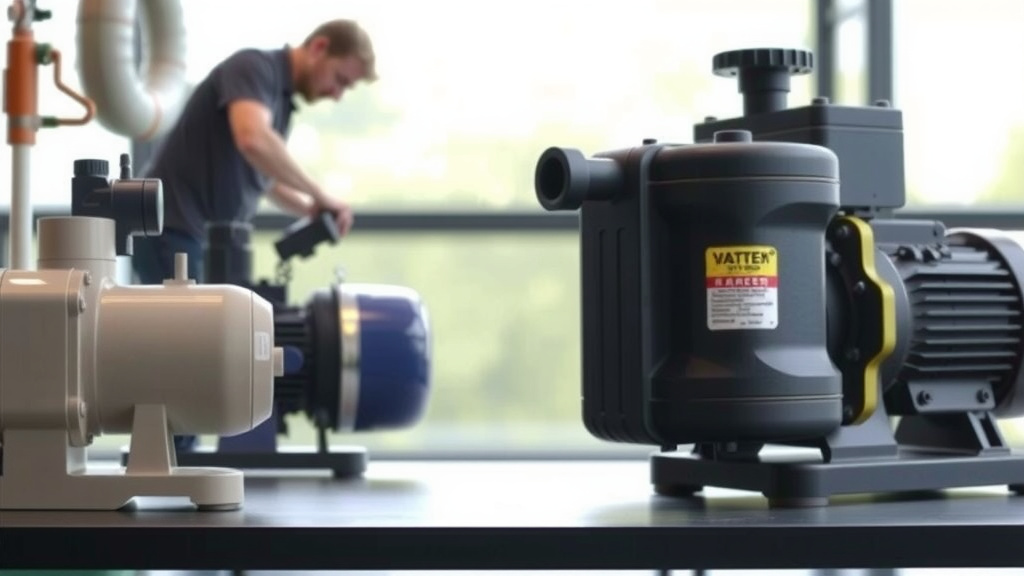
Making the Right Choice for Your Needs
So, how do you decide which pump is best for you? It really boils down to understanding your specific application and what level of vacuum you truly need. Don’t overbuy if you don’t need the extreme capability, but don’t underbuy and find yourself frustrated.
When a 1-Stage Pump is Likely Sufficient
If your tasks are generally less demanding and don’t require pulling a super-deep vacuum, a 1-stage pump is a sensible choice. Consider it if:
- Your budget is a primary concern.
- Your work involves simple air removal or partial vacuum needs.
- You’re a hobbyist with less critical applications.
- You don’t need to get below 100 microns reliably.
We found that for many general-purpose uses, the simplicity and cost-effectiveness of a 1-stage pump are hard to beat.
When a 2-Stage Pump is Almost Certainly Necessary
If your work demands precision, thoroughness, or a very low pressure environment, then a 2-stage pump is likely your best bet. Think about it if:
- You work in HVAC/refrigeration and need to remove all moisture.
- Your laboratory work requires a deep vacuum for experiments.
- You are involved in industrial processes like freeze-drying.
- You need to reliably reach pressures below 50 microns.
Many industry standards, such as those in HVAC, explicitly recommend 2-stage pumps for optimal system performance (ACCA Manual J). We found that professionals in these fields rarely compromise on this.
Checklist: Which Pump Is For You?
To help you quickly assess your needs, ask yourself these questions:
- What is the deepest vacuum (in microns) my application requires?
- How quickly do I need to achieve that vacuum?
- Is removing trace moisture or gases critical for success?
- What is my budget for this tool?
- Will a deeper vacuum save me time or prevent costly errors later?
Answering these will point you clearly toward the 1-stage or 2-stage solution that fits your situation best. We found that taking a few minutes to consider these points saves a lot of headaches down the road.
Ultimately, both 1-stage and 2-stage vacuum pumps have their place. The key is to understand their capabilities and match them to your specific requirements. By doing so, you ensure you get the right tool for the job, saving you time, money, and frustration.
“`Conclusion
You’ve learned that the core difference between 1-stage and 2-stage vacuum pumps lies in the depth of vacuum they can achieve. For many everyday tasks, a 1-stage pump offers simplicity and cost savings. But if your project demands the lowest possible pressure, like in HVAC or sensitive lab work, a 2-stage pump is the clear winner. We found that understanding your specific application’s needs is the most important step. Now, go check the micron requirements for your next job and choose wisely!
Frequently Asked Questions
Can a 1-stage pump ever be good enough for HVAC work?
While a 1-stage pump can pull a vacuum, it typically can’t reach the extremely low micron levels needed for thorough moisture removal in HVAC systems. For reliable and long-lasting AC and refrigeration work, professionals generally require the deeper vacuum provided by a 2-stage pump.
Are 2-stage pumps always much more expensive than 1-stage pumps?
Generally, yes, 2-stage pumps have a higher upfront cost due to their more complex design and additional components. However, we found that the increased efficiency and ability to achieve deeper vacuums can save you time and prevent costly repairs down the line, often justifying the initial investment.
How do I know what ‘deep vacuum’ means in microns?
A “deep vacuum” typically refers to achieving very low pressures, often below 100 microns. For many critical applications, like HVAC system evacuation or laboratory experiments, reaching pressures as low as 10-50 microns is often necessary to remove all traces of moisture and gases.
Is a 2-stage pump overkill if I’m just a hobbyist?
It depends on your hobby! If you’re doing basic crafts or simple projects, a 1-stage pump might suffice. However, if your hobby involves tasks like vacuum bagging composites, certain types of food dehydration, or precision model making, a 2-stage pump could provide the superior results you need.
Will a 2-stage pump break faster because it’s more complex?
Not necessarily. While more complex, well-manufactured 2-stage pumps are built for demanding use. The added stage works more efficiently to reach low pressures, meaning the pump might not have to work as hard overall compared to a 1-stage pump struggling to meet a deep vacuum requirement, potentially leading to a longer lifespan for demanding tasks.