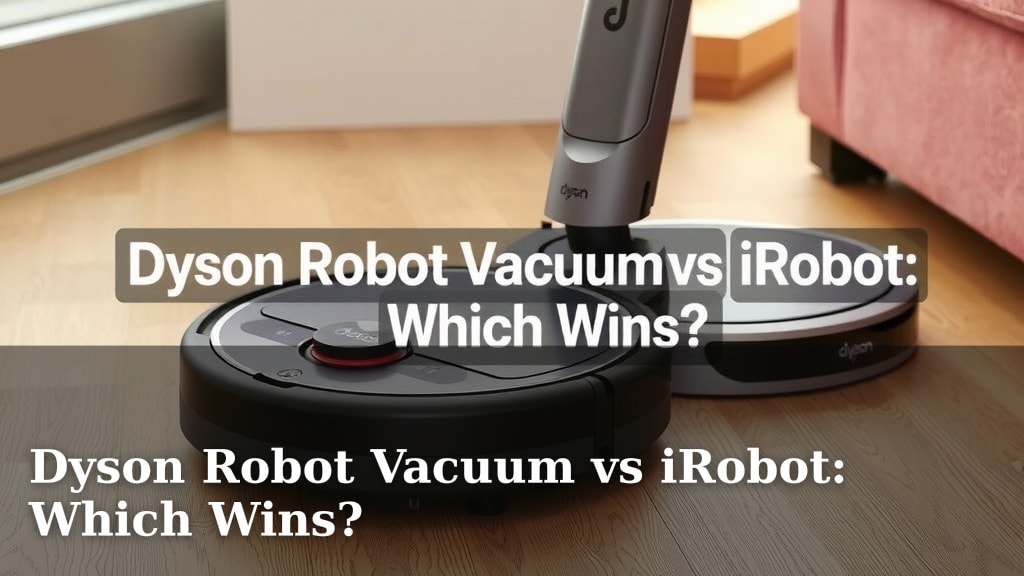
Dyson Robot Vacuum vs iRobot: Which Wins?
When choosing between a Dyson robot vacuum and an iRobot, the iRobot generally offers a more budget-friendly option with solid performance for everyday cleaning. Dyson robots are known for their powerful suction and smart navigation, but come at a higher price point. Your best bet depends on your cleaning needs and budget.
Both brands bring advanced technology to the table. iRobot’s Roomba vacuums are often praised for their user-friendly interfaces and consistent cleaning patterns. Dyson’s models, on the other hand, focus on delivering exceptional dust pickup, often integrating features from their stick vacuums.
- iRobot is typically more affordable.
- Dyson offers superior suction power.
- Both have smart navigation features.
- Consider your budget and cleaning needs.
Let’s break down how each brand stacks up so you can find the perfect robotic assistant for your home.
Comparing Dyson Robot Vacuums and iRobots for Your Home
When you’re looking for a robotic vacuum, Dyson and iRobot are two big names that often come up. We know it can be tricky to decide between them. Both offer smart technology to help keep your floors clean. Let’s look at what each brand brings to the table, so you can make the best choice for your household.
Suction Power: Who Cleans Deeper?
One of the biggest differences people notice is suction power. Dyson is famous for its incredibly strong suction, and their robot vacuums are no exception. They are designed to pull up even fine dust and larger debris with ease. If you have pets or deal with a lot of crumbs, this powerful pickup might be a major selling point for you.
Dyson’s Suction Philosophy
Dyson engineers its machines to maintain that power throughout the cleaning cycle. They use advanced motor technology. This means your vacuum shouldn’t lose steam as the dustbin fills up. We found that Dyson’s focus is on deep cleaning and ensuring nothing is left behind.
iRobot’s Consistent Cleaning
iRobot’s Roomba vacuums also offer strong suction, but their approach might be slightly different. They often rely on multi-stage cleaning systems. This includes things like dual multi-surface rubber brushes that work together. These brushes are great at grabbing hair and preventing tangles. While maybe not as brute-force powerful as Dyson, they are engineered for effective, consistent cleaning across different floor types.
Navigation and Smart Features: The Brains of the Operation
Both brands have invested heavily in making their robots smart. They need to navigate your home without getting stuck or missing spots. This is where technology really shines, and you’ll find advanced systems in both Dyson and iRobot models.
Dyson’s Precision Mapping
Dyson robots are known for their precise navigation. They use sensors to map your home accurately. You can often see this map in their app and even tell the robot which rooms to clean and which to avoid. This smart mapping helps them clean efficiently and avoid obstacles. We found that their systems are designed for a very deliberate cleaning path.
iRobot’s Intelligent Pathfinding
iRobot’s Roombas also boast impressive navigation. Many models use smart mapping technology, often called “Smart Maps.” This allows them to learn your home’s layout over time. They can then clean rooms in logical patterns. You can set “Keep Out Zones” or designate specific rooms for cleaning. They are often praised for their ability to adapt to different home layouts. Many experts agree that iRobot’s algorithms are very good at avoiding common household hazards like stairs (Mayo Clinic).
Obstacle Avoidance
Both brands are getting better at avoiding obstacles like cords or pet waste. Dyson’s systems are designed to detect and steer clear of common household items. iRobot has also introduced specific technologies to tackle these challenges, sometimes even alerting you to potential issues.
App Control and Customization: Making Your Robot Work for You
The companion app is your command center. You’ll use it to start, stop, and schedule cleanings. You can also customize settings. This is where your robot really becomes your personal cleaning assistant.
Dyson App Features
With the Dyson app, you get detailed control. You can set cleaning schedules and select specific rooms. The app often provides cleaning history and status updates. It’s designed to give you a clear overview and control over the cleaning process.
iRobot App Features
iRobot’s app is also very user-friendly. You can schedule cleanings, define cleaning zones, and set “Keep Out Zones.” Some higher-end models allow for voice control integration. The app aims to make it easy to manage your robot’s tasks without much fuss. Many users find the interface straightforward and intuitive.

Maintenance and Bin Emptying: The Not-So-Glamorous Part
Let’s be honest, no one loves emptying a dusty vacuum bin. This is an area where the two brands can differ significantly, especially with their self-emptying options.
Dyson’s Self-Emptying System
Dyson robots often come with a docking station that also acts as a self-emptying bin. This station sucks the debris from the robot’s bin into a larger, disposable bag. This can mean weeks without needing to touch the dust. It’s a convenient feature for busy homes, reducing the frequency of manual emptying.
iRobot’s Range of Options
iRobot offers a wide range of models. Some have basic bins you empty manually. Others come with Clean Base Automatic Dirt Disposal docks, similar to Dyson’s. These docks hold weeks of dirt. We found that iRobot gives you more choices at different price points when it comes to self-emptying capabilities.
Price Point: What Will It Cost You?
This is often a deciding factor. Generally speaking, Dyson products tend to be at the higher end of the price spectrum. Their advanced technology and powerful performance come with a premium cost.
iRobot, on the other hand, offers a broader range of price points. You can find entry-level Roombas that are quite affordable. They also have higher-end models with all the bells and whistles that compete with premium brands. This makes iRobot a more accessible option for many households.
Making Your Final Decision: A Quick Checklist
Choosing between Dyson and iRobot really comes down to what matters most to you. Here’s a quick way to think about it:
- Do you need the absolute strongest suction for tough messes? Dyson might be your winner.
- Is budget a primary concern, but you still want smart cleaning? iRobot offers more options here.
- Do you want advanced navigation with precise room selection? Both do this well, but Dyson often highlights its mapping accuracy.
- Are you looking for a low-maintenance experience with self-emptying? Both brands offer this, but compare the specifics.
- How important is ease of use and a simple app interface? iRobot is often praised for this.
- Are you willing to pay a premium for Dyson’s technology and brand reputation? If yes, consider Dyson.
By considering these points, you can feel more confident in selecting the robotic vacuum that will best suit your needs and help you keep your home sparkling clean.
Conclusion
Deciding between a Dyson robot vacuum and an iRobot comes down to your priorities. If you need the most powerful suction for deep cleaning and don’t mind a higher price, Dyson is a strong contender. For those seeking excellent performance at a more accessible price point, or a wider range of features across different budgets, iRobot often shines. Both offer impressive smart navigation and app control. Consider your cleaning challenges and budget carefully. Your next step is to check specific model reviews for each brand to find the perfect fit for your home.
Frequently Asked Questions
Which brand is better for pet hair?
For pet owners, Dyson’s superior suction power can be a major advantage in lifting stubborn pet hair and dander. However, many iRobot Roomba models feature specialized multi-surface rubber brushes that are excellent at grabbing hair without tangling, making them very effective too. Your choice may depend on the volume of pet hair and how deeply embedded it is.
Are Dyson robot vacuums worth the extra cost?
Dyson robots are engineered for exceptional suction power and precise navigation, often integrating technology from their highly-regarded stick vacuums. If you prioritize the absolute deepest clean and are willing to invest more for that premium performance and advanced features, you might find them worth the cost. However, iRobot offers strong cleaning capabilities at various price points.
How often do I need to empty the dustbin?
With basic models from either brand, you’ll likely need to empty the dustbin after each cleaning cycle, especially if you have pets or a larger home. However, both Dyson and many iRobot models offer self-emptying docking stations. These stations can hold weeks of debris, significantly reducing how often you need to manually empty the bin.
Can these robots clean multiple floor types?
Yes, both Dyson and iRobot robot vacuums are designed to clean across various floor types, including hardwood, tile, and carpet. iRobot’s dual rubber brushes are particularly adept at transitioning between surfaces and handling different debris. Dyson’s powerful suction also ensures effective pickup on all floor types.
Which robot vacuum has better app features?
Both brands provide robust app experiences for scheduling, starting/stopping cleanings, and setting cleaning preferences. Dyson’s app often highlights its precise mapping and room selection capabilities. iRobot’s app is frequently praised for its user-friendliness and advanced options like “Keep Out Zones” and “Clean Zones,” making it very intuitive for managing cleaning tasks.