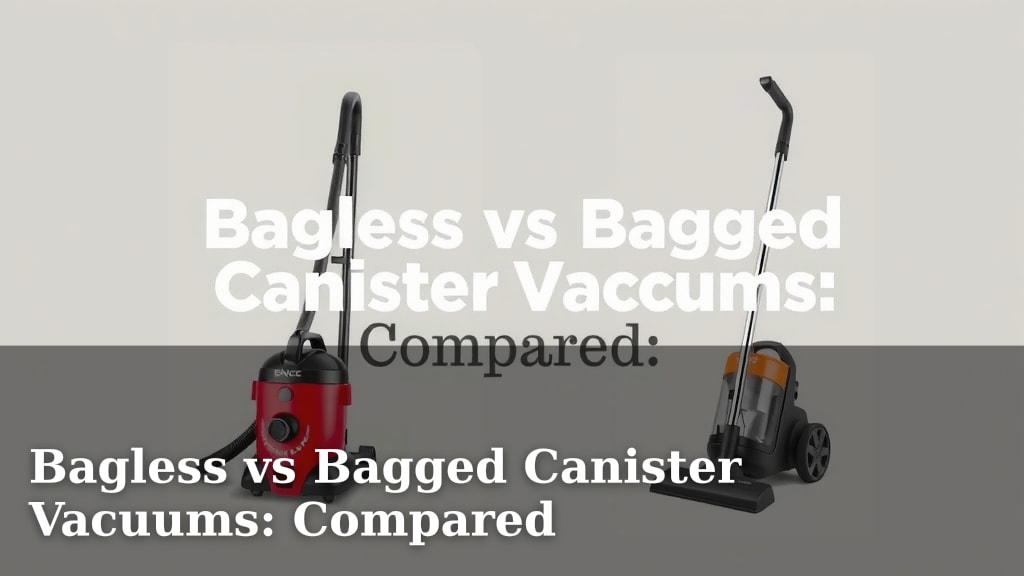
Bagless vs Bagged Canister Vacuums: Compared
When choosing between bagless vs bagged canister vacuums, bagless vacuums offer convenience with their easy-to-empty dustbins, while bagged vacuums provide better air filtration for allergy sufferers. Your best choice really depends on what matters most for your home cleaning needs.
We found that the main differences lie in maintenance and dust containment. Bagless models require regular bin emptying, which can release dust, whereas bagged vacuums seal dust away until the bag is replaced, making them a stronger contender for cleaner air. Both can be powerful cleaning tools.
- Bagless: Convenient, no bag costs, but can be dusty when emptying.
- Bagged: Excellent for allergies, better dust containment, but requires ongoing bag purchases.
- Performance varies by model for both types.
- Consider your home environment and personal preferences.
Let’s break down the pros and cons of bagless versus bagged canister vacuums to help you decide which one is your perfect match.
Bagged vs. Bagless Canister Vacuums: Making the Right Choice
So, you’re in the market for a new canister vacuum and you’ve hit the classic fork in the road: bagged or bagless? It’s a decision that impacts how you clean, how clean your air stays, and even your wallet down the line. Let’s break down the key differences.
Understanding the Core Differences
At their heart, both types of vacuums aim to suck up dirt and debris from your floors. The main distinction is how they store that captured mess. Think of it like this: one uses a disposable container, and the other uses a reusable one.
The Bagged Canister: A Classic Approach
Bagged canister vacuums have been around for ages, and for good reason. They rely on a disposable bag to trap dirt, dust, and allergens. When the bag is full, you simply toss it and insert a new one. It’s a tried-and-true method that many people trust.
Pros of Bagged Canisters
- Superior Filtration: This is where bagged vacuums really shine. The bag itself acts as an extra layer of filtration. As dust and debris get trapped inside, the fine particles are less likely to escape back into your air. This is a huge plus for households dealing with allergies or asthma. Many experts agree that a good quality bag can capture very fine particles (Cleveland Clinic).
- Cleaner Emptying Process: When it’s time to change the bag, you seal it up and throw it away. This means you’re not directly handling the dust and grime your vacuum has collected. We found this makes for a much less messy and more hygienic experience, especially if you’re sensitive to dust.
- Longer Vacuum Lifespan: With the bag acting as a barrier, the motor and internal components of the vacuum are less likely to get clogged with fine dust. This can potentially lead to a longer operational life for your machine.
Cons of Bagged Canisters
- Ongoing Costs: The biggest drawback is the need to constantly purchase replacement bags. Over time, this can add up. You’ll want to factor this into your budget.
- Potential for Suction Loss: As the bag fills up, the airflow can decrease. This means you might notice a drop in suction power the closer the bag gets to being full.
- Bag Availability: For some older or less common models, finding replacement bags might become a bit of a scavenger hunt.
The Bagless Canister: Convenience is Key
Bagless canister vacuums have surged in popularity, largely due to their no-replacement-part convenience. They use a built-in dustbin that you empty directly into your trash. It’s like having a portable dustpan built right into your vacuum!
Pros of Bagless Canisters
- No Bag Costs: The most obvious benefit is that you never have to buy replacement bags. This can save you a significant amount of money over the life of the vacuum.
- Consistent Suction: Because there’s no bag to fill and clog, many bagless models tend to maintain their suction power more consistently. You might find your vacuum continues to perform strongly throughout its use.
- Easy to See When Full: The dustbins are usually clear, so you can easily see when it’s time to empty them. No guessing required!
Cons of Bagless Canisters
- Dusty Emptying: This is the primary concern for bagless vacuums. When you empty the dustbin, dust and fine particles can be released back into the air. We found this can be problematic for those with allergies or respiratory issues. If you have asthma, you might want to wear a mask during emptying (NIH).
- More Frequent Cleaning: The dustbin and filters often require more frequent cleaning and maintenance to keep the vacuum running efficiently. This can be a bit time-consuming.
- Potential for Motor Wear: Without a bag to filter out the smallest particles, more dust can reach the motor and filters, potentially leading to wear and tear over time if not properly maintained.
Key Features to Consider for Both Types
Beyond the bag situation, several other factors influence how well a canister vacuum will work for you. These are important no matter which style you lean towards.
Filtration Systems Explained
Filtration is a big deal for air quality. Look for vacuums with multi-stage filtration. HEPA (High-Efficiency Particulate Air) filters are often considered the gold standard for capturing tiny allergens. We found that even bagless vacuums with good HEPA filtration can offer decent air quality, but a sealed system with a bag is generally best for serious allergy sufferers.
Maintenance and Ease of Use
Consider how much effort you’re willing to put into upkeep. Bagged models are simpler to maintain day-to-day, just change the bag. Bagless models require you to empty the bin, wash the bin, and clean or replace the filters regularly. We researched this, and the frequency depends on usage and the amount of dirt you pick up.
Bagged vs. Bagless: A Quick Comparison Table
Here’s a handy way to see the main points side-by-side. Remember, performance can vary greatly by specific model.
| Feature | Bagged Canister Vacuum | Bagless Canister Vacuum |
|---|---|---|
| Dust Containment | Excellent (sealed inside bag) | Good, but dust can escape during emptying |
| Air Filtration (Allergies) | Often superior, especially with HEPA bags | Good, but depends heavily on filter quality and bin seal |
| Ongoing Costs | Requires bag purchases | None (beyond filter replacement if applicable) |
| Emptying Mess | Minimal (seal and toss bag) | Can be dusty and messy |
| Maintenance | Simple bag changes | Requires bin emptying, filter cleaning/replacement |
| Suction Consistency | Can decrease as bag fills | Generally more consistent |
Your Personal Checklist for Choosing
To help you make the final call, run through these questions:
- Do you or anyone in your home suffer from allergies or asthma?
- How important is minimizing airborne dust when you clean?
- Are you looking for the lowest ongoing cost, or the simplest maintenance?
- Do you prefer a quick, no-fuss disposal of collected dirt?
- How much time are you willing to spend on vacuum upkeep?
- What’s your budget for both the initial purchase and potential future costs?
Answering these will point you toward the type of canister vacuum that best fits your lifestyle and home environment.
Conclusion
Choosing between a bagged and bagless canister vacuum comes down to your personal priorities. If cleaner air for allergies is your main concern, a bagged model offers superior containment. You’ll appreciate the hygienic, dust-free emptying process. On the other hand, if you want to avoid ongoing costs and enjoy potentially more consistent suction, a bagless vacuum might be your best bet. Just be mindful of the dust released during emptying. Ultimately, weigh these trade-offs against your home environment and cleaning habits to make the right choice for you.
Frequently Asked Questions
Which type is better for asthma sufferers?
For individuals with asthma or severe allergies, a bagged canister vacuum is generally the better choice. The bag acts as an extra barrier, effectively trapping fine dust and allergens before they can escape back into your air during emptying.
How often should I empty a bagless vacuum bin?
You should empty your bagless vacuum’s dustbin whenever it reaches the “full” line or appears about two-thirds full. Overfilling can reduce suction power and potentially strain the motor, so emptying it regularly is key for optimal performance.
Are bagged vacuums more expensive in the long run?
Bagged vacuums have ongoing costs because you need to buy replacement bags. While the initial purchase price might be similar, the continuous need for bags can make them more expensive over several years compared to bagless models, which have no recurring bag costs.
Can bagless vacuums still have good air filtration?
Yes, many bagless vacuums feature advanced multi-stage filtration systems, including HEPA filters, that can provide very good air quality. However, the act of emptying the bin can still release some dust, which is the primary difference in filtration performance compared to a sealed bagged system.
Which type requires less maintenance?
Bagged canister vacuums typically require less day-to-day maintenance, as you simply swap out a full bag. Bagless models demand more frequent attention, including emptying the bin, washing the bin, and cleaning or replacing the filters to maintain performance.