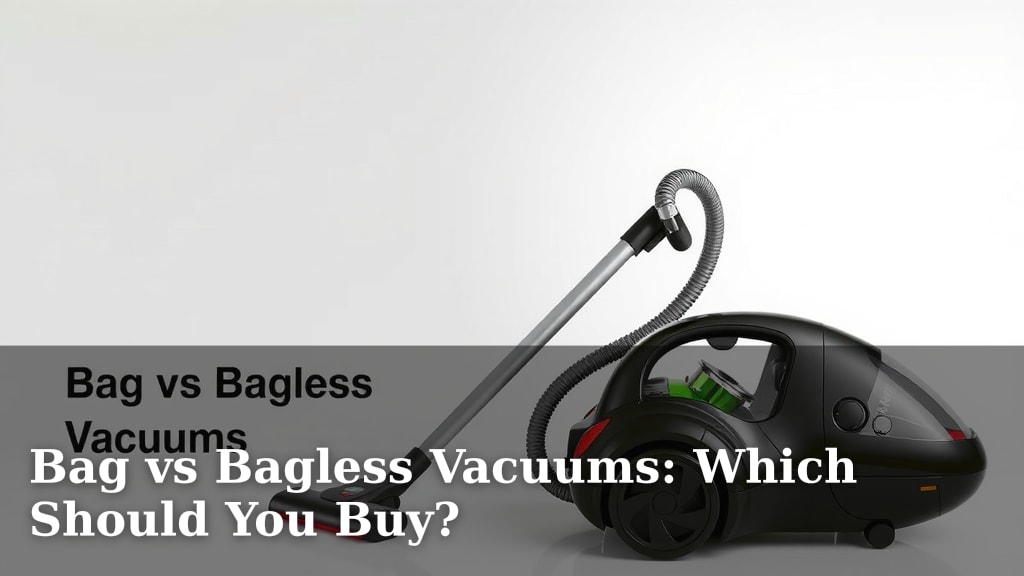
Bag vs Bagless Vacuums: Which Should You Buy?
Deciding between a bagged and bagless vacuum depends on your cleaning needs and preferences. Bagless models offer convenience and cost savings by eliminating bag purchases, while bagged vacuums generally provide better allergen filtration, making them a top choice for allergy sufferers.
Many homeowners wonder which type will best suit their household. We found that while bagless vacuums are popular for their ease of use and ongoing savings, bagged models excel at trapping fine dust and allergens. Your choice will likely hinge on how sensitive you or your family members are to dust and pollen.
- Bagless vacuums save money on bags.
- Bagged vacuums are better for allergies.
- Consider your filtration needs.
- Think about ongoing costs.
Let’s walk through the pros and cons of each to help you find the perfect vacuum for your home.
Choosing Your Next Vacuum: Bagged or Bagless?
Deciding between a bagged and bagless vacuum cleaner can feel like a big choice for your home. Both have their strengths. We found that your lifestyle and household needs are the biggest factors. Let’s break down the differences to help you make the right pick.
Understanding Bagged Vacuums: The Allergy Fighter
Bagged vacuums use a disposable bag to collect dirt and debris. This bag acts as a double barrier. When you’re done cleaning, you simply remove the full bag and toss it. This keeps the dust contained.
Pros of Bagged Models
Many experts say bagged vacuums offer superior filtration. The bag itself traps tiny particles. This is great for people with allergies or asthma. It means less fine dust gets back into your air.
- Excellent for Allergies: Reduces exposure to dust, pollen, and pet dander.
- Cleaner Disposal: Less dust released when emptying the bin.
- Often Quieter: The bag can act as a sound dampener.
Cons of Bagged Models
The main drawback is the ongoing cost of buying replacement bags. You can’t use the vacuum without them. Also, when a bag is nearly full, the suction power might decrease. You need to remember to buy the right bags for your model.
- Ongoing Cost: You must buy new bags regularly.
- Potential Suction Loss: Power can drop as the bag fills up.
- Finding Replacement Bags: You need to ensure you get the correct ones.
Understanding Bagless Vacuums: The Convenience Champion
Bagless vacuums use a dustbin or canister that you empty directly into the trash. This bin is usually transparent. You can see how much dirt you’ve collected.
Pros of Bagless Models
The biggest advantage is cost savings. You never have to buy replacement bags. Emptying the dustbin is usually straightforward. Many find this more convenient than buying and replacing bags.
- No Bag Costs: Saves money over time.
- Easy to Empty: Just detach the bin and empty it.
- See Your Dirt: Visually track your cleaning progress.
Cons of Bagless Models
Emptying the dustbin can release dust back into the air. This might not be ideal for those with respiratory issues. You also need to clean the dustbin and filters more regularly. Some find the process a bit messy.
- Dust Release During Emptying: Can aggravate allergies.
- Regular Maintenance Required: Filters need cleaning or replacing.
- Potential for Mess: Dust can escape when emptying.
Filtration: What’s Trapped and What Isn’t
Filtration is a key difference. Bagged vacuums often come with HEPA (High-Efficiency Particulate Air) filters. These are very effective at trapping fine particles. The bag itself provides a primary layer of filtration.
Bagless vacuums also use filters, but their effectiveness can vary. The dustbin needs to seal well. If the seal isn’t perfect, dust can escape through the exhaust. Many newer bagless models have excellent multi-stage filtration systems, often including HEPA filters.
The Environmental Protection Agency (EPA) notes that HEPA filters can remove at least 99.97% of dust, pollen, and mold spores that are 0.3 micrometers in size. For those sensitive to allergens, this is a significant consideration (EPA).
Maintenance: What’s Involved?
Both types require some maintenance. Bagged vacuums need regular bag changes. You should also check the exhaust filter periodically. Bagless vacuums require emptying the dustbin after each use, or when it’s full. You’ll also need to clean or replace the filters regularly, as they can get clogged with fine dust.
Bagged Vacuum Maintenance
Simply put, you replace the bag when it’s full. Some vacuums have an indicator light. Always unplug the vacuum before changing the bag. You might also want to wipe down the exterior occasionally.
Bagless Vacuum Maintenance
Empty the dustbin into your trash can. You’ll likely need to wash the dustbin with soap and water. Crucially, you must clean or replace the filters. Many manufacturers recommend rinsing filters and letting them air dry completely.
Cost Considerations: Upfront vs. Long-Term
When you first buy a vacuum, bagless models might sometimes be a bit pricier upfront. However, you save money over the life of the vacuum. Bagged models can be less expensive to purchase initially. But the cost of replacement bags adds up. We found that over several years, a bagless model can often be more economical.
| Feature | Bagged Vacuum | Bagless Vacuum |
|---|---|---|
| Initial Cost | Often lower | Can be higher |
| Ongoing Cost | Replacement bags | Minimal (filter replacements) |
| Allergy Friendliness | Generally better | Depends on filtration |
| Maintenance | Change bags, check filters | Empty bin, clean/replace filters |
| Convenience | Simpler disposal for some | No need to buy bags |
Making Your Final Choice: A Quick Checklist
To help you decide, consider these points:
- Do you or anyone in your home suffer from allergies or asthma?
- How important are ongoing cost savings to you?
- Do you prefer the idea of contained dust disposal?
- Are you comfortable with regular filter cleaning and maintenance?
- What’s your budget for both the initial purchase and long-term costs?
Thinking about these questions will guide you toward the best vacuum for your unique needs. Both types can deliver a clean home, but one might simply fit your routine and health concerns better.
Conclusion
You’ve learned the key differences between bagged and bagless vacuums. Bagged models offer superior protection against allergens with their contained disposal. Bagless vacuums provide long-term cost savings and simple convenience by eliminating bag purchases. Your decision hinges on your personal priorities: are you battling allergies or seeking ongoing affordability? Consider your household’s specific needs. Now, take the information you’ve gathered to your next vacuum purchase. You’re ready to choose the best fit for a cleaner, healthier home!
Frequently Asked Questions
Are bagless vacuums truly less effective for allergies?
Bagless vacuums can be effective for allergies, but it depends on their filtration system. Look for models with multi-stage filtration and true HEPA filters. You’ll also need to be diligent about emptying the dustbin outside and cleaning the filters regularly to minimize dust release.
How often do I need to buy bags for a bagged vacuum?
The frequency of bag replacement depends on your home and usage. For busy households with pets or allergy sufferers, you might change bags every 1-2 months. For lighter use, it could be every 3-4 months. Many vacuums have an indicator light to let you know when the bag is full.
Can I use any brand of bag with my bagged vacuum?
No, you should always use the specific brand and type of replacement bag recommended by your vacuum’s manufacturer. Using the wrong bag can lead to poor performance, reduced suction, or even damage to your vacuum cleaner.
Is emptying a bagless vacuum dustbin messy?
Emptying a bagless dustbin can sometimes release dust. To minimize this, try emptying it directly into an outdoor trash can or a kitchen trash bag. Holding the bin firmly and carefully can also help reduce dust escaping into the air.
Which type of vacuum is better for pet owners?
For pet owners, both types can work well, but consider your specific needs. Bagged vacuums are often preferred if shedding and dander are a major allergy concern, thanks to their superior filtration. Bagless vacuums can be convenient for quickly tackling pet hair, but ensure they have good filtration to manage dander.

![7 Best Canister Vacuum Under $200 [2026]](https://neatixo.com/wp-content/uploads/2026/05/7-best-canister-vacuum-under-200-2026-featured-768x432.jpg)