2.5 CFM vs 3 CFM Vacuum Pump: Does Higher CFM Matter?
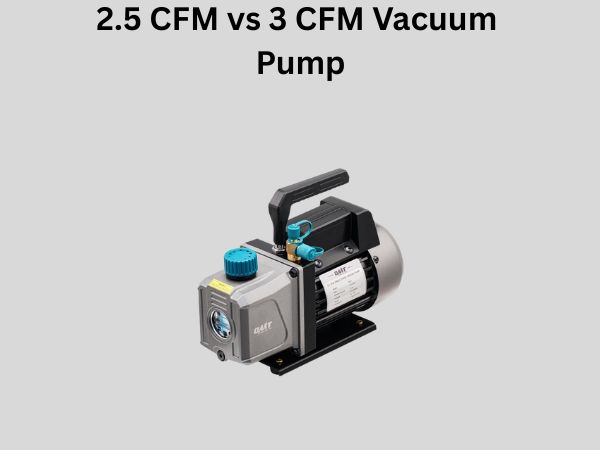
When you’re shopping for a vacuum pump, you’ll notice that manufacturers throw around numbers like 2.5 CFM and 3 CFM without much explanation. But here’s the thing—these numbers actually matter quite a bit, and understanding the difference between them could save you time, money, and frustration down the road. So let’s dig into what these specifications really mean and whether that extra 0.5 CFM is worth your investment.
Understanding CFM: What Does It Actually Mean?
Before we can compare these two vacuum pump sizes, we need to understand what CFM stands for. CFM means cubic feet per minute, and it measures how much air volume a vacuum pump can remove from a system in 60 seconds. Think of it like the difference between a garden hose and a fire hose—they both deliver water, but one does it in much greater quantities.
When you see a pump rated at 2.5 CFM, that means it removes 2.5 cubic feet of air from your system every minute. A 3 CFM pump, on the other hand, removes 3 cubic feet. This might sound like a small difference, but in the world of vacuum systems, that 20 percent increase can make a meaningful impact on how quickly your pump achieves and maintains a vacuum.
Why CFM Matters in Vacuum Pump Performance
CFM is essentially the speed at which your vacuum pump works. A higher CFM means faster evacuation times, which translates to quicker system pumpdown. If you’re working on projects where time is money, or where you need to reach specific vacuum levels quickly, this becomes especially important. Imagine you’re trying to bleed air from brake lines—a faster pump gets you finished sooner.
The Real-World Difference Between 2.5 CFM and 3 CFM
Let me break down what this difference actually means in practical terms. If you’re evacuating a system that contains, say, 15 cubic feet of air at atmospheric pressure, your 2.5 CFM pump would theoretically take six minutes to reach a complete vacuum (ignoring back-pressure and other variables). Your 3 CFM pump would take five minutes. That’s a 16 percent faster evacuation time.
But here’s where it gets more complicated. The difference becomes even more pronounced when you factor in real-world conditions like system back-pressure, leaks, and the fact that your pump slows down as it reaches lower pressures. The pump doesn’t remove air at a constant rate—it’s faster at the beginning and slower as you approach a deep vacuum.
Pump-Down Time Comparison
Let’s look at some actual scenarios. For a small automotive application with a typical system volume of around 10 cubic feet:
- A 2.5 CFM pump might take 8-10 minutes to reach 500 microns
- A 3 CFM pump might achieve the same result in 6-8 minutes
For larger systems or industrial applications, the time savings become even more dramatic. If you’re running your vacuum pump for eight hours a day, that extra efficiency adds up over weeks and months of operation.
Applications That Benefit from Higher CFM
Not every application requires the extra horsepower of a 3 CFM pump. Let me walk you through which scenarios actually demand that higher capacity.
Automotive HVAC Evacuation
Air conditioning systems in cars need proper evacuation before you add refrigerant. A 3 CFM pump handles this faster, but honestly, a 2.5 CFM pump works fine for most technicians. The difference might be 5-10 minutes per car, which adds up if you’re servicing multiple vehicles daily.
Refrigeration System Maintenance
Commercial refrigeration systems are much larger than automotive AC systems. Here, that extra 0.5 CFM really shines. A 3 CFM pump can evacuate these larger volumes noticeably faster, and when you’re losing refrigeration capacity, every minute counts.
Industrial Manufacturing and Laboratory Work
Any operation that requires consistent, reliable vacuum conditions benefits from higher CFM. Research labs, manufacturing plants dealing with vacuum impregnation, and degassing operations all prefer the faster pump-down speeds of a 3 CFM unit.
Cost Considerations: Is the Extra Performance Worth It?
Here’s the practical question: should you spend more money for a 3 CFM pump when a 2.5 CFM pump costs less? That depends entirely on your specific needs and budget situation.
A quality 2.5 CFM pump typically costs between $200-400, while a comparable 3 CFM pump runs $300-500. That 25-50 percent price premium adds up, especially if you’re equipping a small shop or buying multiple units.
Calculating Your Return on Investment
Think about your labor costs. If you bill $75 per hour and save even 30 minutes per week using a faster pump, you’re saving $37.50 weekly. Over a year, that’s nearly $2,000 in labor savings. In that context, spending an extra $100-150 on the pump pays for itself in weeks.
But if you’re a hobbyist working on your own vehicles occasionally, spending extra money on a 3 CFM pump might not make financial sense. You’re not compensating yourself for labor time, so the speed advantage doesn’t translate into dollar savings.
Power Requirements and Operating Costs
Here’s something people often overlook: a 3 CFM pump typically requires a more powerful motor than a 2.5 CFM unit. That means higher electrical consumption, which affects your operating costs over time.
A 2.5 CFM pump usually runs on a 1/4 horsepower motor, while a 3 CFM pump typically needs 1/3 to 1/2 horsepower. The difference in electricity consumption might be 200-400 watts when running. If you operate your pump for 10 hours per week, you’re looking at an extra 2-4 kilowatt-hours weekly, or roughly $25-50 per year in additional electricity costs depending on your local rates.
Maintenance and Longevity
A larger motor working harder might accumulate maintenance needs faster. More power means more heat generation, which means your pump might need oil changes more frequently. That’s another cost factor to consider when comparing these options.
Quality vs. CFM: The Hidden Variables
Here’s something critical that many people miss: the CFM rating itself depends on how the manufacturer measures it. Not all 3 CFM pumps perform identically. Some manufacturers rate their pumps at atmospheric pressure, while others rate them at lower pressures where the pump is slower.
A poorly manufactured 3 CFM pump might actually perform worse than a well-engineered 2.5 CFM pump from a reputable brand. Brand reputation, build quality, motor design, and pump mechanism all play roles in actual performance that go beyond the CFM number on the box.
The Importance of Ultimate Vacuum
CFM tells you how fast a pump works, but ultimate vacuum tells you how deep it can go. Some 2.5 CFM pumps can reach 50 microns, while others max out at 100 microns. Meanwhile, a 3 CFM pump might only reach 150 microns depending on its design. For many applications, ultimate vacuum matters more than pump speed.
Specific Use Case Analysis
For the Home Mechanic
If you’re working on your own vehicles once or twice a year, a 2.5 CFM pump serves you perfectly well. You’re not operating it for eight hours daily, and you can afford to wait an extra few minutes for evacuation. Save your money and get the 2.5 CFM unit.
For the Small Shop Owner
Running a small automotive shop with 1-2 technicians and maybe 5-10 cars per week? The 2.5 CFM pump works fine here too. Your technicians aren’t waiting around—they can use that time for other tasks while the pump runs.
For the High-Volume Operation
If you’re running a busy shop doing 20+ refrigeration services or AC evacuations weekly, the 3 CFM pump makes sense. That faster evacuation time translates directly into more jobs completed, higher throughput, and better customer satisfaction.
For Industrial and Commercial Settings
Manufacturing facilities, research labs, and large refrigeration companies almost always benefit from 3 CFM and higher. The cost of the pump is negligible compared to the value of faster production times and more efficient operations.
Pump Maintenance: Does CFM Affect Upkeep?
Both 2.5 CFM and 3 CFM pumps require regular maintenance to perform well. You need to change the oil regularly, clean or replace filters, and check for leaks. The higher CFM pump doesn’t inherently require more complicated maintenance, but it does work harder, which might mean more frequent oil changes.
Quality oil is crucial for vacuum pump longevity. Whether you’re running a 2.5 or 3 CFM pump, using proper vacuum pump oil makes an enormous difference. Cheap oil breaks down faster under the heat and stress of operation, leading to pump failure.
Environmental and Noise Considerations
A more powerful 3 CFM pump typically generates more noise than a 2.5 CFM unit. If you’re operating in a small enclosed space or a quiet environment, that difference becomes noticeable. The 2.5 CFM pump might actually be preferable in noise-sensitive situations.
Both pump types require proper venting and oil recovery systems to comply with environmental regulations. This infrastructure cost is similar regardless of which CFM rating you choose, so it shouldn’t influence your decision.
Making Your Decision: Questions to Ask Yourself
Before settling on a pump, honestly answer these questions:
- How frequently will you use the pump? Daily operation favors the 3 CFM model.
- What’s your typical system size? Larger systems benefit more from higher CFM.
- What’s your budget? The price difference might be decisive.
- How important is speed in your operation? If time equals money, go with 3 CFM.
- What’s the ultimate vacuum requirement for your applications?
- Do you have adequate electrical supply for a higher-powered pump?
- Is noise a concern in your work environment?
Future-Proofing Your Investment
Consider whether your business might grow. If you’re just starting out with automotive work but planning to expand into refrigeration services, the 3 CFM pump gives you more flexibility. It’s frustrating to outgrow equipment you just bought. Spending a bit more now for capability you might need later often makes sense.
That said, don’t over-invest in equipment you don’t need. Buying a 3 CFM pump for work that only requires 2.5 CFM is wasteful spending that doesn’t benefit you.
Conclusion
So does higher CFM matter? The honest answer is: it depends on your specific situation. That extra 0.5 CFM from a 3 CFM pump delivers a measurable 20 percent improvement in pump-down speed, which compounds into significant time savings for high-volume operations. If you’re evacuating multiple systems daily and billing for your labor, that speed advantage translates directly into income.
For hobbyists, small shops, or low-volume users, the 2.5 CFM pump handles the job perfectly well and saves you money upfront and on operating costs. The difference in real-world operation won’t be dramatic enough to justify the extra expense unless you’re operating at high volume.
Consider your actual usage patterns, your budget constraints, and your growth plans. Buy quality equipment from reputable manufacturers regardless of CFM rating—a well-built 2.5 CFM pump will outperform a poorly made 3 CFM unit every time. Focus on ultimate vacuum ratings and build quality just as much as you focus on CFM numbers. When you match the right pump to your actual needs, you’ll be happy with your purchase for years to come.
Frequently Asked Questions
Can I use a 2.5 CFM pump for applications that call for 3 CFM?
Yes, you can use a 2.5 CFM pump for applications designed for 3 CFM, though it will take longer to achieve evacuation. The main consequence is increased labor time. As long as your pump can reach the ultimate vacuum required for your application and you’re not in a high-volume situation where speed is critical, the smaller pump will work. You just need patience.
What’s the difference between CFM and ultimate vacuum rating?
CFM measures how fast a pump removes air from a system, while ultimate vacuum (measured in microns) indicates how low the pump can go. You need both specifications to choose properly. A pump with high CFM but poor ultimate vacuum might evacuate quickly but not reach the vacuum level your application requires.
Do I need a 3 CFM pump for automotive air conditioning work?
A 2.5 CFM pump handles automotive AC evacuation just fine. Most cars have relatively small AC systems that don’t require massive pump capacity. The 3 CFM pump provides faster service times, which matters if you’re servicing multiple vehicles daily, but it’s not necessary for occasional or small-shop use.
How often should I change the oil in my vacuum pump?
Most manufacturers recommend changing vacuum pump oil every 50-100 hours of operation, or at least quarterly even if the pump isn’t heavily used. A 3 CFM pump working harder might need oil changes every 40-50 hours. Always check your specific pump’s manual for exact recommendations.
Can a bigger pump damage my refrigeration system?
No, a larger CFM pump won’t damage your refrigeration system. Whether you use a 2.5 CFM or 3 CFM pump, the evacuation process works the same way. The only difference is how quickly it happens. Higher CFM actually poses less risk because it achieves the necessary vacuum faster with less exposure time.
“`